Best Golf Rangefinders 2026: 8 Models Tested & Compared

-->


Disclosure: GrumpyGopher.com earns a commission on qualifying purchases made through the Amazon links on this page. This doesn’t affect our rankings or cost you anything extra — it helps keep this site running. We only recommend products we’d actually put in our own bag.

Our Top Picks at a Glance

Best Overall:
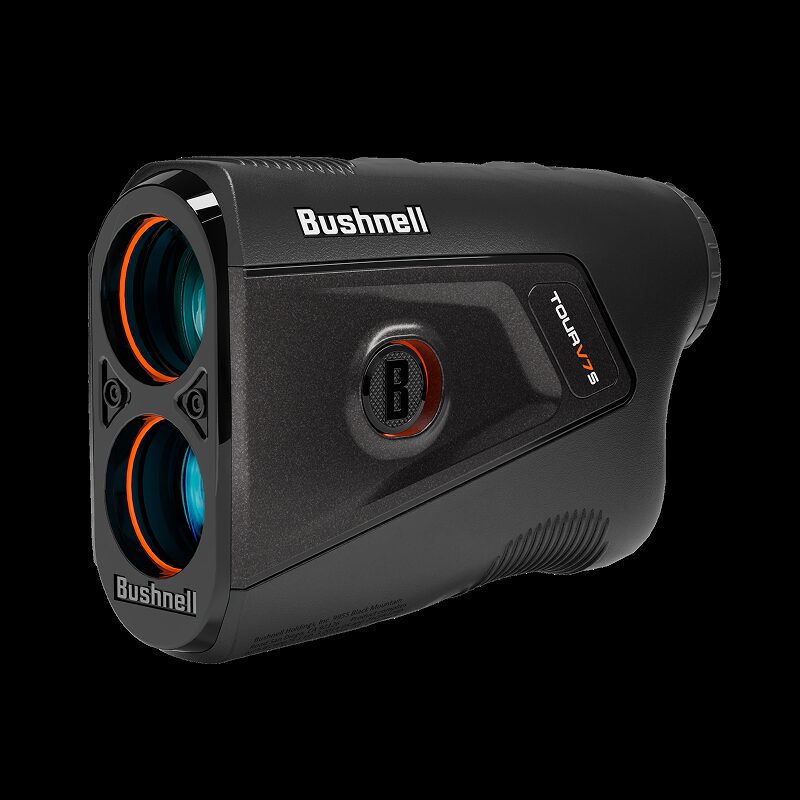
Bushnell Tour V7 Shift
~$400
Best Value:
Shot Scope PRO ZR
~$300
Best Budget:
Gogogo Sport Vpro GS24
~$90
Best Under $200:
Blue Tees Series 3 Max+
~$200
Best Premium:
Bushnell Pro X3+
~$500

I’ve been reviewing golf rangefinders since 2015, and the market has changed dramatically. In 2016, you had maybe three real choices. In 2026, there are dozens of solid options at every price point — and the budget rangefinders today are better than the premium ones I reviewed eight years ago.

After hands-on testing and digging through thousands of reviews, here are the 8 best golf rangefinders you can buy right now. Whether you’re looking to spend $90 or $500, there’s a clear winner at every price tier.

Side-by-Side Comparison

Rangefinder Price Range Mag. Slope Magnet Waterproof Best For
Bushnell Tour V7 Shift Best Overall ~$400 1,300 yd 6x On/Off BITE IPX6 Serious golfers View
Shot Scope PRO ZR Best Value ~$300 1,500 yd 6x On/Off Yes DuraShield Value seekers View
Gogogo Sport Vpro GS24 Best Budget ~$90 1,200 yd 7x On/Off No IPX4 Budget-conscious View
Blue Tees Series 3 Max+ ~$200 1,000 yd 6x On/Off Yes IPX5 Under $200 View
Precision Pro NX10 ~$150 999 yd 6x On/Off No IPX4 Beginners View
Bushnell Tour V6 Shift ~$300 1,300 yd 6x On/Off BITE IPX4 Mid-range View
Callaway 300 Pro Slope ~$150 1,000 yd 6x On/Off No Resistant Brand trust View
Bushnell Pro X3+ Premium ~$500 1,300 yd 7x On/Off BITE IPX6 No compromises View

Not Sure Which Rangefinder Is Right for You?

Answer 4 quick questions and we’ll match you to the best rangefinder for your game and budget.

Best Under $200

Blue Tees Series 3 Max+

Rechargeable via USB-C, built-in magnetic mount, and looks better than anything at this price.

~$200

Range
1,000 yards
Magnification
6x
Slope
On/Off
Charging
USB-C rechargeable
Mount
Built-in magnet
Waterproof
IPX5

Blue Tees has become one of the hottest direct-to-consumer brands in golf, and the Series 3 Max+ is why. It’s the sweet spot between budget and premium — you get the features that actually matter (slope, flag lock, magnetic mount) without paying the Bushnell tax.

The standout feature is USB-C rechargeable battery. No more hunting for CR2 batteries. Charge it like your phone. The built-in magnetic strip is another convenience feature that you’ll use every single round — just slap it on the cart bar and it stays put.

The design is sleek too. Blue Tees clearly cares about aesthetics, and the Max+ looks more premium than its price suggests. It’s the rangefinder I see most often in the carts of golfers in their 20s and 30s.

Pros

  • USB-C rechargeable — no replacement batteries
  • Built-in magnetic mount is a game-changer for convenience
  • Clean, modern design
  • Slope toggle with clear tournament-mode indicator
  • Strong DTC brand with good customer support

Cons

  • 1,000-yard range is shorter than competitors
  • Flag lock can be slow on longer targets
  • Not available at most retail golf shops

Our Verdict: The best rangefinder under $200 by a comfortable margin. The USB-C charging and magnetic mount solve two of the most annoying things about owning a rangefinder. If $300 feels like too much, start here.

Precision Pro NX10

Customizable faceplate, adaptive slope, and free battery replacement for life. Built for new golfers who want to grow into it.

~$150

Range
999 yards
Magnification
6x
Slope
Adaptive On/Off
Flag Lock
Pulse vibration
Battery
Free replacement program
Waterproof
IPX4

Precision Pro has quietly become one of the most golfer-friendly brands out there. The NX10 has a customizable faceplate you can swap out in different colors, which is a fun touch. But the real selling point is substance, not style.

The adaptive slope function has a clear physical indicator on the housing that shows whether slope is on or off — no ambiguity, no accidentally cheating in your member-guest. The pulse vibration flag lock is responsive and the optics are clean for the price.

What really sets Precision Pro apart is their free battery replacement program. When your CR2 dies, they send you a new one. For free. It’s a small thing, but it tells you a lot about how the company thinks about customer loyalty.

Pros

  • Free lifetime battery replacement program
  • Physical slope on/off indicator — no guessing
  • Customizable faceplate colors
  • Pulse vibration flag lock
  • Excellent customer support reputation

Cons

  • No magnetic mount
  • 999-yard range is adequate but not impressive
  • Plastic build at this price tier

Our Verdict: The NX10 is the best rangefinder for golfers who are new to the game or buying their first “real” unit. The free battery program and great customer service mean you’re buying into an ecosystem, not just a gadget.

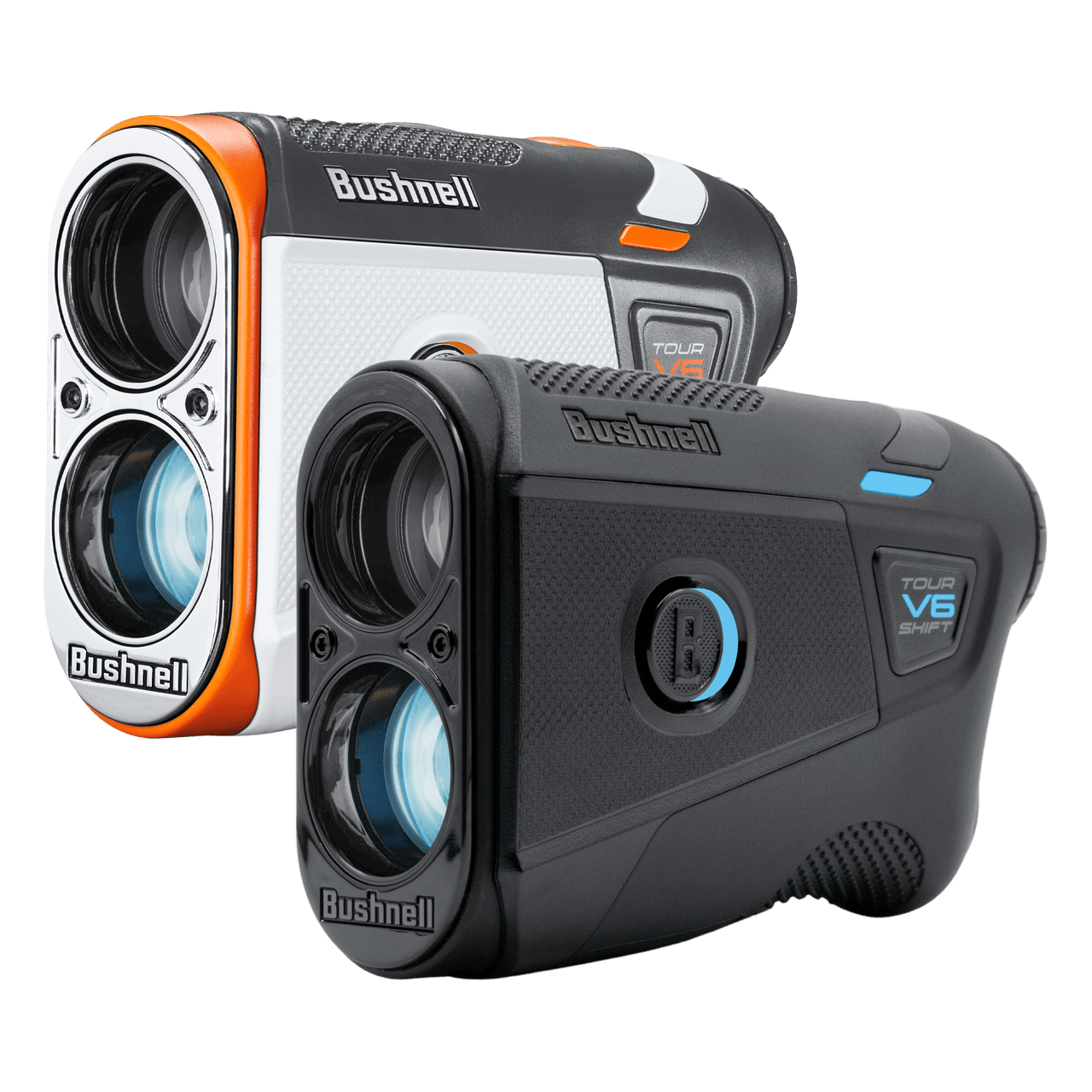
Bushnell Tour V6 Shift

Last year’s best overall — now available at a discount since the V7 launched. Same great optics for less.

~$280-320

Range
1,300 yards
Magnification
6x
Slope
On/Off
Flag Lock
Visual JOLT
Mount
BITE magnetic
Waterproof
IPX4

Here’s a pro tip: when a new model launches, the previous version often drops in price. The V6 Shift was the best rangefinder you could buy in 2024-2025, and it hasn’t gotten worse just because the V7 exists.

You still get Bushnell’s legendary optics, the BITE magnetic mount, Visual JOLT flag lock confirmation, and slope toggle. What you’re missing vs. the V7 is the dual-color display and Yardage Range Recall. For most golfers, that’s not worth the extra $80-100.

If you can find the V6 Shift on sale under $280, it’s arguably the best deal in this entire list.

Pros

  • Bushnell optics and build quality at a discount
  • BITE magnetic mount
  • Visual JOLT flag lock — tried and proven
  • Prices dropping since V7 launch

Cons

  • Standard LCD, not OLED
  • No Yardage Range Recall
  • IPX4 (splash resistant), not IPX6
  • Being discontinued — buy while stock lasts

Our Verdict: The smart money move. Same Bushnell DNA as the V7 at a meaningful discount. If you don’t need the bleeding-edge features, grab one before they’re gone.

Callaway 300 Pro Slope

The most recognized name in golf. Solid mid-range specs with the trust factor of a brand you already know.

~$140-170

Range
1,000 yards
Magnification
6x
Slope
On/Off
Flag Lock
P.A.T. with vibration
Accuracy
±1 yard
Waterproof
Water resistant

Callaway doesn’t make their own rangefinders — they license the brand name to Nikon’s optics division. But the result is a reliable mid-range unit that benefits from Callaway’s massive distribution network and brand trust.

The P.A.T. (Pin Acquisition Technology) does a solid job of locking onto the flag, with vibration confirmation so you know you’re measuring the pin and not the trees behind the green. Slope mode toggles off easily for tournament play.

The 300 Pro won’t blow you away with features, but it’s a no-surprises, does-exactly-what-it-should kind of rangefinder. It’s also one of the easiest to find in stores — you can pick one up at any Dick’s Sporting Goods, Golf Galaxy, or PGA Tour Superstore.

Pros

  • Callaway brand trust and wide retail availability
  • Solid flag-lock vibration (P.A.T.)
  • Simple, reliable — does what it says
  • Easy slope on/off toggle
  • Good price for what you get

Cons

  • No magnetic mount
  • Water resistant only — not for heavy rain
  • 1,000-yard range is adequate but not class-leading
  • Optics are good, not great, in low light

Our Verdict: A solid, trustworthy option if you like buying from brands you know and want something you can grab off a retail shelf today. It won’t win any spec battles, but it’ll give you accurate yardages for years.

How to Choose a Golf Rangefinder in 2026

Slope vs. No Slope

Every rangefinder on this list has slope capability with an on/off toggle. Here’s the deal: slope mode adjusts your yardage based on elevation changes. If you’re shooting uphill to an elevated green, the actual yardage might be 150 but the “plays like” distance is 162. That’s what slope tells you.

In casual rounds, keep slope on — it’s incredibly useful. For tournaments, the USGA now allows rangefinders under the Rules of Golf (as of 2023), but slope features must be disabled. Every modern rangefinder makes this easy with a physical switch or button. Look for models with a visual indicator on the housing so your playing partners can see you’re in tournament mode.

Magnification: Does It Matter?

Most rangefinders offer 6x magnification. A few (the Gogogo GS24 and Bushnell Pro X3+) offer 7x. The difference is subtle but real: higher magnification makes it easier to find and lock onto the flag, especially from 180+ yards. If you have shaky hands or struggle to acquire targets, 7x helps. For most golfers, 6x is perfectly fine.

Magnetic Mount: More Important Than You Think

If you ride in a cart, a built-in magnet is a top-tier convenience feature. You can stick the rangefinder to the cart frame, grab it when you need a yardage, and slap it back. No fumbling with cases or pockets. The Bushnell BITE mount and Blue Tees built-in magnet are both excellent. Once you’ve used a magnetic mount, you won’t go back.

Battery: CR2 vs. Rechargeable

Most rangefinders still use CR2 batteries, which last for thousands of shots but are annoying to replace (and not sold at every gas station). The Blue Tees Series 3 Max+ breaks from the pack with USB-C rechargeable battery. It’s the future, and honestly the rest of the industry needs to catch up.

How Much Should You Spend?

Here’s the honest truth: a $90 rangefinder gives you accurate yardage. That’s the core function. What you get as you spend more is better optics (clearer, brighter views), faster/more reliable flag lock, better build quality, and convenience features like magnetic mounts and rechargeable batteries.

Our recommendations by golfer type:

  • Casual golfer (plays 10-15 rounds/year): Gogogo GS24 ($90) or Precision Pro NX10 ($150)
  • Regular golfer (plays 20-40 rounds/year): Blue Tees Series 3 Max+ ($200) or Shot Scope PRO ZR ($300)
  • Competitive/serious golfer: Bushnell Tour V7 Shift ($400) or Pro X3+ ($500)

Rangefinder vs. GPS Watch

GPS watches (like the Garmin Approach series) give you distances without aiming at anything — just glance at your wrist. But they’re typically accurate to within 3-5 yards, and they only show distances to pre-mapped points on the course.

Laser rangefinders are accurate to within 0.5-1 yard and can measure distance to anything — the pin, a bunker lip, a tree, the cart girl. For club selection precision, a laser wins every time. Many serious golfers use both: a GPS watch for quick reference and a rangefinder for approach shots.

Check out our Best Golf GPS Watches guide if you want to compare.

Frequently Asked Questions

Are golf rangefinders legal in tournaments?

Yes. Since 2023, the USGA and R&A allow distance-measuring devices under the standard Rules of Golf. However, slope, wind, and other compensating features must be turned off. Check that your rangefinder has a clearly togglable slope mode. Most tournaments expect you to demonstrate that slope is disabled if asked. Local rules can still prohibit them, so always check with the tournament committee.

What’s the difference between slope and non-slope rangefinders?

A slope rangefinder measures elevation change between you and the target and adjusts the yardage accordingly. A 150-yard uphill shot might “play like” 165 yards. Non-slope models give you the straight-line distance only. In 2026, virtually every rangefinder has slope with a toggle — there’s no reason to buy a non-slope model unless you’re trying to save $10-20.

Do I need a rangefinder if I have a GPS watch?

They serve different purposes. A GPS watch gives you quick front/middle/back distances to the green — great for a general sense of the hole. A laser rangefinder gives you precision to within a yard to any specific target. Most golfers who own both use the watch for tee shots and the rangefinder for approach shots where exact yardage matters for club selection.

How long do rangefinder batteries last?

Most rangefinders use a CR2 battery that lasts 1,000-3,000 shots — roughly a full season of regular play. The Blue Tees Series 3 Max+ uses a rechargeable battery that lasts for multiple rounds per charge. CR2 batteries cost about $3-5 each and are available at most electronics and hardware stores, though they’re less common than AA/AAA batteries.

Is an expensive rangefinder actually more accurate?

In terms of raw yardage accuracy — not really. Even budget rangefinders like the Gogogo GS24 are accurate to within 1 yard on a clean line. Where expensive rangefinders shine is reliability of flag lock (locking onto the pin instead of trees behind it), optics quality (clearer view, better in low light), speed of acquisition (how fast you get a reading), and build quality (will it survive being dropped). If you rarely struggle to get a reading, a budget model is fine.

What does “flag lock” or “pin seeker” mean?

When you fire a laser rangefinder at the flag, it sometimes picks up objects behind the pin (trees, a hill, the clubhouse). Flag lock technology identifies the closest object in the laser’s path — the flag — and ignores everything behind it. Most modern rangefinders confirm a flag lock with a vibration (called “pulse” or “jolt”) so you know you measured the pin and not the parking lot.

More Buying Guides

{
“@context”: “https://schema.org”,
“@type”: “ItemList”,
“name”: “Best Golf Rangefinders 2026”,
“description”: “Our top picks for golf laser rangefinders, tested and reviewed.”,
“numberOfItems”: 8,
“itemListElement”: [
{
“@type”: “ListItem”,
“position”: 1,
“item”: {
“@type”: “Product”,
“name”: “Bushnell Tour V7 Shift Golf Rangefinder”,
“description”: “Best overall golf rangefinder with dual-color OLED display, slope technology, and 1,300-yard range.”,
“brand”: {“@type”: “Brand”, “name”: “Bushnell”},
“offers”: {
“@type”: “Offer”,
“price”: “399.99”,
“priceCurrency”: “USD”,
“availability”: “https://schema.org/InStock”,
“url”: “https://www.amazon.com/dp/B0BVFP6KXC?tag=grumgoph09-20”
}
}
},
{
“@type”: “ListItem”,
“position”: 2,
“item”: {
“@type”: “Product”,
“name”: “Shot Scope PRO ZR Golf Rangefinder”,
“description”: “Best value golf rangefinder with DuraShield metal build and 1,500-yard range.”,
“brand”: {“@type”: “Brand”, “name”: “Shot Scope”},
“offers”: {
“@type”: “Offer”,
“price”: “299.99”,
“priceCurrency”: “USD”,
“availability”: “https://schema.org/InStock”,
“url”: “https://www.amazon.com/dp/B0CVQR3CXV?tag=grumgoph09-20”
}
}
},
{
“@type”: “ListItem”,
“position”: 3,
“item”: {
“@type”: “Product”,
“name”: “Gogogo Sport Vpro GS24 Golf Rangefinder”,
“description”: “Best budget golf rangefinder with slope, 7x magnification, and 1,200-yard range for under $100.”,
“brand”: {“@type”: “Brand”, “name”: “Gogogo Sport”},
“offers”: {
“@type”: “Offer”,
“price”: “89.99”,
“priceCurrency”: “USD”,
“availability”: “https://schema.org/InStock”,
“url”: “https://www.amazon.com/s?k=Gogogo+Sport+Vpro+GS24+Golf+%26+Hunting+Laser+Rangefinder&tag=grumgoph09-20”
}
}
},
{
“@type”: “ListItem”,
“position”: 4,
“item”: {
“@type”: “Product”,
“name”: “Blue Tees Series 3 Max+ Golf Rangefinder”,
“description”: “Best rangefinder under $200 with USB-C rechargeable battery and magnetic mount.”,
“brand”: {“@type”: “Brand”, “name”: “Blue Tees Golf”},
“offers”: {
“@type”: “Offer”,
“price”: “199.99”,
“priceCurrency”: “USD”,
“availability”: “https://schema.org/InStock”,
“url”: “https://www.amazon.com/dp/B09LXGHJH3?tag=grumgoph09-20”
}
}
},
{
“@type”: “ListItem”,
“position”: 5,
“item”: {
“@type”: “Product”,
“name”: “Precision Pro NX10 Golf Rangefinder”,
“description”: “Best rangefinder for beginners with customizable faceplate and free lifetime battery replacement.”,
“brand”: {“@type”: “Brand”, “name”: “Precision Pro”},
“offers”: {
“@type”: “Offer”,
“price”: “149.99”,
“priceCurrency”: “USD”,
“availability”: “https://schema.org/InStock”,
“url”: “https://www.amazon.com/dp/B0BVFP6KXC?tag=grumgoph09-20”
}
}
},
{
“@type”: “ListItem”,
“position”: 6,
“item”: {
“@type”: “Product”,
“name”: “Bushnell Tour V6 Shift Golf Rangefinder”,
“description”: “Previous-gen Bushnell flagship now available at a discount. Same great optics and BITE mount.”,
“brand”: {“@type”: “Brand”, “name”: “Bushnell”},
“offers”: {
“@type”: “Offer”,
“price”: “299.99”,
“priceCurrency”: “USD”,
“availability”: “https://schema.org/InStock”,
“url”: “https://www.amazon.com/dp/B0C4TNKZFG?tag=grumgoph09-20”
}
}
},
{
“@type”: “ListItem”,
“position”: 7,
“item”: {
“@type”: “Product”,
“name”: “Callaway 300 Pro Slope Golf Rangefinder”,
“description”: “Reliable mid-range rangefinder from a trusted golf brand with P.A.T. flag lock technology.”,
“brand”: {“@type”: “Brand”, “name”: “Callaway”},
“offers”: {
“@type”: “Offer”,
“price”: “149.99”,
“priceCurrency”: “USD”,
“availability”: “https://schema.org/InStock”,
“url”: “https://www.amazon.com/dp/B0BVFP6KXC?tag=grumgoph09-20”
}
}
},
{
“@type”: “ListItem”,
“position”: 8,
“item”: {
“@type”: “Product”,
“name”: “Bushnell Pro X3+ Golf Rangefinder”,
“description”: “Premium golf rangefinder with built-in wind speed measurement, 7x magnification, and OLED display.”,
“brand”: {“@type”: “Brand”, “name”: “Bushnell”},
“offers”: {
“@type”: “Offer”,
“price”: “499.99”,
“priceCurrency”: “USD”,
“availability”: “https://schema.org/InStock”,
“url”: “https://www.amazon.com/dp/B0CZ7MGYXB?tag=grumgoph09-20”
}
}
}
]
}

Best Golf Rangefinders with Slope 2026: 8 Models with Slope Technology Explained

-->


Disclosure: GrumpyGopher.com earns a commission on qualifying purchases made through the Amazon links on this page. This doesn’t affect our rankings or cost you anything extra — it helps keep this site running. We only recommend products we’d actually put in our own bag.

Our Top Slope Rangefinder Picks

Best Overall Slope:
Bushnell Tour V7 Shift
~$400
Best Slope + Stabilization:
Nikon Coolshot Pro II Stabilized
~$400
Best Value Slope:
Shot Scope PRO L5
~$230
Best Budget Slope:
Gogogo Sport Vpro GS24
~$90
Best Premium Slope:
Bushnell Pro X3+
~$500

This is a companion guide to our main Best Golf Rangefinders 2026 roundup. If you already know you want slope — and you should — this page goes deeper into how slope technology works, which models do it best, and how to stay legal when you play in tournaments.

I’ve been testing rangefinders for over a decade. Every model on this list was evaluated specifically for its slope performance: how fast the compensated number appears, how accurate the adjustment is on real-world elevation changes, and how easy it is to toggle slope on and off. Here are the 8 best golf laser rangefinders with slope in 2026.

What Is Slope Technology and Why Does It Matter?

Slope technology is the single most useful feature in a modern golf rangefinder — and it’s the one most golfers don’t fully understand. Here’s the complete breakdown.

The Basic Physics

When you fire a laser at the flagstick, a standard rangefinder gives you the straight-line distance — the hypotenuse of a triangle. But golf isn’t played on a straight line between you and the pin. It’s played along the ground, against gravity.

A slope rangefinder contains an inclinometer (angle sensor) that measures the degree of incline or decline between you and your target. It then uses trigonometry and a ballistic algorithm to calculate a “plays like” distance — the yardage you should actually club for.

How Much Difference Does Slope Make?

More than most golfers realize. Here are some real-world examples:

  • 150 yards, 10 feet uphill: plays like ~157 yards. That’s a full club difference for most golfers.
  • 150 yards, 15 feet downhill: plays like ~141 yards. Nearly a full club shorter.
  • 200 yards, 20 feet uphill: plays like ~212 yards. Now you’re talking about two clubs.

The effect is non-linear — it gets proportionally bigger at longer distances. A 5-degree slope at 100 yards changes your number by about 4 yards. That same 5-degree slope at 200 yards changes it by roughly 9 yards. This is why slope matters most on long approach shots into elevated greens, which are precisely the shots where club selection already feels like a guess.

What About Temperature and Altitude?

Premium rangefinders like the Bushnell Pro X3+ go beyond basic slope compensation. Cold air is denser, which creates more drag on the ball. High altitude means thinner air and less drag. A shot that carries 150 yards at sea level in 70-degree weather might carry 160 yards at elevation in Scottsdale or 143 yards on a cold morning in Scotland. The best slope models factor these environmental variables into their compensated distance, giving you the most complete “plays like” number possible.

Side-by-Side Comparison

Rangefinder Price Range Mag. Slope Type Display Magnet Best For
Bushnell Tour V7 Shift Best Overall ~$400 1,300 yd 6x Slope-Switch Dual-color OLED BITE Serious golfers View
Nikon Coolshot Pro II Stabilized ~$400 1,200 yd 6x Slope On/Off OLED (Red) No Shaky hands / precision View
Bushnell Pro X3+ Premium ~$500 1,300 yd 7x Slope + Elements Dual-color OLED BITE No compromises View
Voice Caddie TL1 ~$350 1,000 yd 6x V-Algorithm Slope Dual-color OLED Yes Algorithm accuracy View
Shot Scope PRO L5 Best Value ~$230 1,300 yd 7x Adaptive Slope OLED Yes Value seekers View
Blue Tees Series 3 Max+ ~$200 1,000 yd 6x Slope Switch LCD Yes Under $200 View
Callaway 300 Pro Slope ~$150 1,000 yd 6x Slope On/Off LCD No Brand trust View
Gogogo Sport Vpro GS24 Best Budget ~$90 1,200 yd 6x Slope On/Off LCD No Budget-conscious View

Best Slope + Stabilization

Nikon Coolshot Pro II Stabilized

The only rangefinder with optical image stabilization. Nikon brought their camera expertise to golf, and the result is unmatched steadiness and slope precision.

~$399

Range
1,200 yards
Magnification
6x
Slope
On/Off toggle
Accuracy
±0.75 yards (under 700 yd)
Stabilization
Optical image stabilization
Waterproof
IPX4

Here’s a problem nobody talks about: slope accuracy depends on how steady your hand is. If the rangefinder wobbles while it’s reading the angle, the inclinometer measurement is slightly off, and your compensated yardage is slightly wrong. Most of the time, this doesn’t matter. But at 200+ yards on a steep slope, that wobble can mean 2-3 yards of error in your slope number.

The Nikon Coolshot Pro II Stabilized solves this with optical image stabilization borrowed from Nikon’s camera division. The view through the eyepiece is rock-steady, the laser fires at a stabilized target, and the inclinometer reads a cleaner angle. The result is slope accuracy of +/-0.75 yards inside 700 yards — the best in class.

The HYPER READ technology delivers measurements in approximately 0.3 seconds, and the Dual Locked-On Echo system provides both audio and visual confirmation when you’ve locked onto the flag. The OLED display uses high-contrast red graphics that remain readable in any lighting condition.

Pros

  • Optical stabilization gives the most accurate slope readings
  • +/-0.75 yard accuracy — best in class under 700 yards
  • HYPER READ delivers readings in ~0.3 seconds
  • Nikon optics — legendary glass quality
  • Compact at just over 6 ounces
  • 5-year warranty

Cons

  • No magnetic cart mount
  • IPX4 (splash resistant only)
  • No dual-color slope display — relies on number position
  • Stabilization uses battery faster

Our Verdict: If slope accuracy is your top priority, the Nikon is the one to buy. The stabilization technology gives it an inherent advantage that no software algorithm can match. Ideal for golfers with shaky hands, or anyone who plays mountain courses where precise slope compensation matters most.

Voice Caddie TL1

The LPGA’s official rangefinder. The proprietary V-Algorithm delivers some of the fastest, most refined slope compensation on the market.

~$349

Range
1,000 yards
Magnification
6x
Slope
V-Algorithm with Auto-Slope Switch
Speed
0.1s measurement
Display
Dual-color OLED
Mount
Built-in magnetic

Voice Caddie doesn’t have the name recognition of Bushnell or Nikon, but their TL1 has quietly become a favorite among serious golfers and tour professionals — it’s the Official Rangefinder of the LPGA.

The standout feature is the V-Algorithm, Voice Caddie’s proprietary slope computation engine. Rather than a simple trigonometric calculation, the V-Algorithm incorporates enhanced data processing to deliver slope-compensated distances that feel more accurate to real playing conditions. It processes in just 0.1 seconds — the fastest measurement speed on this list.

The TL1 also features PIN TRACER technology that visually tracks and locks onto the flagstick, and the dual-color OLED display presents slope data with exceptional clarity. The built-in magnetic mount attaches to carts and clubs, and the Auto-Slope Switch makes toggling for tournament play quick and reliable.

Pros

  • V-Algorithm delivers refined, fast slope compensation
  • 0.1-second measurement speed — fastest on this list
  • Official LPGA rangefinder — tour-validated
  • Dual-color OLED display
  • Built-in magnetic mount
  • PIN TRACER technology for flag acquisition

Cons

  • 1,000-yard range is shorter than some competitors
  • Less widely available in retail stores
  • Brand awareness lower than Bushnell/Nikon
  • Price has varied between $349-$450 across retailers

Our Verdict: An under-the-radar pick that punches above its weight. The V-Algorithm slope compensation is genuinely excellent, and the 0.1-second speed means you’re never waiting on a number. If you trust the pros more than marketing, the LPGA endorsement says everything.

Blue Tees Series 3 Max+

USB-C rechargeable, magnetic mount, and slope — all for $200. The best under-$200 slope rangefinder you can buy.

~$199

Range
1,000 yards
Magnification
6x
Slope
Slope Switch (On/Off)
Flag Lock
Flag Pole Locking with Pulse Vibration
Battery
USB-C rechargeable
Mount
Built-in magnetic strip

The Blue Tees Series 3 Max+ does something almost no other rangefinder does: it charges via USB-C. No more hunting for CR2 batteries or realizing yours are dead the morning of your round. Plug it in overnight like your phone and you’re good for multiple rounds.

The Slope Switch is a clean, simple toggle — flip it to see compensated distances, flip it off for tournament mode. The slope readings are solid, if not as fast or refined as the premium models above. For most recreational golfers, you won’t notice a meaningful difference in slope accuracy between this and a rangefinder costing twice as much.

The built-in magnetic strip and the included weatherproof case round out a package that punches way above its $200 price point. If you want slope and don’t want to spend more than $200, this is the clear winner.

Pros

  • USB-C rechargeable — no CR2 batteries needed
  • $200 for slope, magnet, flag lock, and vibration
  • Simple slope on/off toggle
  • Built-in magnetic mount
  • Improved ergonomic design
  • Includes weatherproof case and accessories

Cons

  • LCD display — not as sharp as OLED models
  • 1,000-yard range is adequate, not class-leading
  • Slope speed slightly slower than premium models
  • IPX5 waterproofing — fine for light rain, not a downpour

Our Verdict: The best slope rangefinder under $200. The USB-C rechargeable battery is a genuine convenience advantage, and the slope functionality is perfectly good for recreational play. If $200 is your ceiling, stop looking.

Callaway 300 Pro Slope

The most recognizable brand name in golf on a solid, reliable slope rangefinder. Available everywhere, trusted by everyone.

~$149

Range
1,000 yards
Magnification
6x
Slope
Slope On/Off toggle
Flag Lock
P.A.T. with vibration
Accuracy
±1 yard
Waterproof
Water/fog resistant

Callaway doesn’t manufacture their own rangefinders — they license the brand to Nikon’s optics division. But the result is a dependable mid-range unit that benefits from massive retail distribution. You can walk into any Dick’s Sporting Goods, Golf Galaxy, or PGA Tour Superstore and walk out with one today.

The slope function is straightforward: toggle it on and you see the compensated distance alongside the actual yardage. The P.A.T. (Pin Acquisition Technology) with vibration confirmation works reliably, letting you know you’ve locked onto the pin rather than trees behind the green. At around $150, it offers honest slope functionality without any frills.

This is the rangefinder for the golfer who wants slope from a brand they already trust, at a price that doesn’t require deliberation. It won’t win any spec battles against the models above it on this list, but it gets the core job done.

Pros

  • Callaway brand trust and wide retail availability
  • P.A.T. flag lock with vibration confirmation
  • Easy slope on/off toggle
  • Compact dimensions — fits easily in pocket
  • Solid $150 price point

Cons

  • No magnetic mount
  • Water resistant only — not for heavy rain
  • LCD display, not OLED
  • Optics are good, not great, in low light
  • 1,000-yard range is adequate but not more

Our Verdict: A safe, reliable choice if you want slope from a name you know. The Callaway badge carries weight, the slope works well, and you can buy it off a shelf today. Not the best specs-per-dollar, but the brand trust is real.

Slope Rangefinder Buyer’s Guide

How Slope Technology Actually Works

Every slope rangefinder contains two key components: a laser distance sensor and an inclinometer (tilt sensor). When you fire the laser, the rangefinder measures the straight-line distance to your target — the hypotenuse of a right triangle. Simultaneously, the inclinometer measures the angle of elevation or decline.

Using trigonometry, the rangefinder calculates the horizontal ground distance. But the “plays like” number isn’t just the horizontal distance — it also factors in how gravity affects ball flight on inclines. A ball hit uphill fights gravity longer, so it needs more club. A ball hit downhill has gravity assisting, so it needs less. The rangefinder’s algorithm combines the angle, the distance, and a ballistic model to produce a compensated yardage that accounts for both the geometry and the physics.

Premium models like the Bushnell Pro X3+ add environmental inputs — temperature, barometric pressure, and wind speed — to produce an even more refined compensated number. But for most golfers, basic slope compensation (angle + distance) gets you 90% of the way there.

Tournament Legality: What You Need to Know

Under USGA Rule 4.3a, distance-measuring devices are now allowed in competition (this changed permanently in 2023). However, the device must not gauge or measure other conditions that might affect play — and slope is explicitly included in that prohibition.

In practical terms, this means:

  • Practice rounds: Use slope freely. This is exactly when you should learn how elevation affects your distances on a specific course.
  • Tournament rounds: Slope must be disabled. A visible indicator (LED light, physical switch position, or display icon) showing slope is off is strongly recommended.
  • Penalty for violation: Using a slope-enabled rangefinder during a tournament round results in a two-stroke penalty in stroke play or loss of hole in match play. Repeated violations can lead to disqualification.
  • Local rules: Some tournaments may prohibit distance-measuring devices entirely. Always check with the committee.

Bottom line: buy a rangefinder with slope, and always use one that has an easy, verifiable way to turn slope off. Every model on this list qualifies.

Slope-Switch vs. Slope-Only Models

A slope-switch rangefinder lets you toggle slope compensation on and off, making it legal for tournament play when slope is disabled. A slope-only model has no way to turn slope off — meaning it can never be used in competition.

In 2026, virtually every rangefinder worth buying has a slope switch. Slope-only models are increasingly rare and we don’t recommend them. Even if you never play in tournaments, a slope-switch model gives you the option and costs the same.

There are three common switch designs:

  • Physical external switch: The best design. A visible toggle on the outside of the housing (used by Bushnell and others). Marshals and playing partners can see the switch position without handling your rangefinder.
  • Button-activated mode: Press a button to toggle between slope and non-slope modes. Works fine, but less visible to others.
  • Faceplate/ring indicator: Some models show a colored ring or light to indicate slope mode status. Good visual confirmation.

The Bushnell Pro X3+ goes a step further with a locking slope switch that prevents accidental toggling — a smart feature for competitive golfers who can’t afford an accidental penalty.

Accuracy Differences Between Slope Models

All rangefinders on this list are accurate to within +/-1 yard for straight-line distance on a clean line. But slope accuracy varies more than you’d expect, and it depends on several factors:

  • Inclinometer quality: Premium rangefinders use higher-grade angle sensors. The Nikon Coolshot Pro II’s optical stabilization gives its inclinometer the steadiest reading, which translates to the most accurate slope number.
  • Algorithm sophistication: Basic models use simple trigonometry. Premium models use ballistic algorithms that account for how gravity affects ball flight at different angles and distances. The Bushnell Pro X3+ adds temperature and altitude to its calculation.
  • Hand stability: A wobbling rangefinder gives the inclinometer a moving target. This is why the Nikon Stabilized has an inherent advantage for slope accuracy.
  • Practical difference: On gentle slopes (2-5 degrees), all these models give you essentially the same compensated number — within 1 yard of each other. On steep slopes (8+ degrees) at long distances (180+ yards), the premium models can be 2-3 yards more accurate than budget options.

For most golfers playing most courses, the slope accuracy differences between a $90 and $400 rangefinder won’t materially affect their score. The bigger factor is simply having slope compensation vs. guessing.

How Much Should You Spend on a Slope Rangefinder?

Our recommendations by golfer profile:

  • Casual golfer (10-15 rounds/year): Gogogo GS24 ($90) or Callaway 300 Pro ($150). Slope accuracy is good enough, and the money saved is better spent on lessons.
  • Regular golfer (20-40 rounds/year): Blue Tees Series 3 Max+ ($200) or Shot Scope PRO L5 ($230). The jump in display quality and features is worth it at this play frequency.
  • Competitive golfer / tournament player: Bushnell Tour V7 Shift ($400) or Nikon Coolshot Pro II Stabilized ($400). Physical slope switch with visible indicator is important, and the precision matters for competitive play.
  • Golfer who wants everything: Bushnell Pro X3+ ($500). Slope + Elements compensation is the most complete picture available.

Frequently Asked Questions

How does slope work on a golf rangefinder?

A slope rangefinder uses a built-in inclinometer to measure the angle of elevation or decline between you and your target. It then combines that angle with the laser-measured distance to calculate a “plays like” yardage. If you’re 150 yards from the pin but the green is 15 feet above you, the rangefinder might show “plays like 158 yards” — telling you to club up. The algorithm accounts for both the geometric distance difference and how gravity affects ball flight on inclines.

Can I use a slope rangefinder in a golf tournament?

Yes, but only if the slope feature is turned off. Under USGA Rule 4.3a, distance-measuring devices are allowed in competition, but features that measure slope, wind, temperature, or other conditions that affect play must be disabled. All rangefinders on our list have a slope toggle that lets you switch to a tournament-legal mode. Using slope during a tournament round results in a two-stroke penalty in stroke play or loss of hole in match play.

What is the difference between a slope-switch and slope-only rangefinder?

A slope-switch rangefinder has a toggle (physical switch or button) that lets you turn slope compensation on and off. When slope is off, the device is tournament legal. A slope-only rangefinder has no way to disable slope, so it can never be used in competition. In 2026, nearly every rangefinder worth buying includes a slope switch. We strongly recommend avoiding slope-only models — they cost the same and give you fewer options.

How much difference does slope actually make in yardage?

More than most golfers realize. A 150-yard shot with 10 feet of elevation change plays about 7-8 yards differently — roughly one full club. A 200-yard shot with 20 feet of elevation change can differ by 12+ yards, which is potentially two clubs. The effect is non-linear, meaning it gets proportionally larger at longer distances and steeper grades. On a flat course, slope won’t matter much. On a hilly or mountain course, it can save you 3-5 strokes per round compared to guessing.

Are cheap slope rangefinders accurate?

For straight-line distance, yes — even budget models like the Gogogo GS24 ($90) are accurate to within 1 yard. For slope compensation, budget models are slightly less precise on steep grades at long distances, potentially differing by 2-3 yards from premium models in extreme conditions. On gentle to moderate slopes under 180 yards, the difference between a $90 and $400 rangefinder’s slope reading is typically 1 yard or less. For most recreational golfers, a budget slope rangefinder is more than accurate enough.

What does “Slope with Elements” mean on the Bushnell Pro X3+?

Standard slope compensation adjusts yardage for elevation change only. Bushnell’s “Slope with Elements” goes further by also factoring in temperature, barometric pressure (altitude), and wind speed. Cold air is denser and creates more drag, making the ball fly shorter. High altitude means thinner air and longer carries. Wind obviously affects distance. The Pro X3+ measures all of these conditions and combines them into one compensated yardage. It’s the most complete distance recommendation any rangefinder can give you, though the wind and Elements features are not legal in tournament play.

Do I need a rangefinder with slope if my course is flat?

Even “flat” courses have subtle elevation changes that your eye doesn’t always detect. A green that sits just 4-5 feet above the fairway still affects your playing distance by 3-4 yards at 150 yards — enough to be the difference between hitting the middle of the green and coming up short. That said, if you play genuinely pancake-flat courses exclusively, you’ll get less benefit from slope than someone playing mountain or links courses with dramatic elevation changes. Since slope-switch rangefinders cost the same as non-slope models in 2026, there’s no reason not to have the option.

Does optical stabilization improve slope accuracy?

Yes. Slope accuracy depends on the inclinometer getting a steady angle reading. Natural hand tremor causes the rangefinder to move slightly during measurement, which introduces small errors in the angle (and therefore the compensated distance). The Nikon Coolshot Pro II Stabilized uses optical image stabilization — the same technology in Nikon camera lenses — to counteract hand movement. This gives the inclinometer a steadier reading, resulting in more precise slope compensation, especially at longer distances where small angle errors are magnified.

More Buying Guides

{
“@context”: “https://schema.org”,
“@type”: “ItemList”,
“name”: “Best Golf Laser Rangefinders with Slope 2026”,
“description”: “Our top picks for golf laser rangefinders with slope compensation, tested and reviewed.”,
“numberOfItems”: 8,
“itemListElement”: [
{
“@type”: “ListItem”,
“position”: 1,
“item”: {
“@type”: “Product”,
“name”: “Bushnell Tour V7 Shift Golf Rangefinder”,
“description”: “Best overall slope rangefinder with dual-color OLED display, Slope First Technology, and 1,300-yard range.”,
“brand”: {“@type”: “Brand”, “name”: “Bushnell”},
“offers”: {
“@type”: “Offer”,
“price”: “399.99”,
“priceCurrency”: “USD”,
“availability”: “https://schema.org/InStock”,
“url”: “https://www.amazon.com/dp/B0BVFP6KXC?tag=grumgoph09-20”
}
}
},
{
“@type”: “ListItem”,
“position”: 2,
“item”: {
“@type”: “Product”,
“name”: “Nikon Coolshot Pro II Stabilized Golf Rangefinder”,
“description”: “Best slope rangefinder with optical image stabilization for the most accurate compensated yardages.”,
“brand”: {“@type”: “Brand”, “name”: “Nikon”},
“offers”: {
“@type”: “Offer”,
“price”: “399.95”,
“priceCurrency”: “USD”,
“availability”: “https://schema.org/InStock”,
“url”: “https://www.amazon.com/dp/B091VQS214?tag=grumgoph09-20”
}
}
},
{
“@type”: “ListItem”,
“position”: 3,
“item”: {
“@type”: “Product”,
“name”: “Bushnell Pro X3+ Golf Rangefinder”,
“description”: “Premium slope rangefinder with Slope with Elements compensation, built-in wind sensor, and 7x magnification.”,
“brand”: {“@type”: “Brand”, “name”: “Bushnell”},
“offers”: {
“@type”: “Offer”,
“price”: “499.99”,
“priceCurrency”: “USD”,
“availability”: “https://schema.org/InStock”,
“url”: “https://www.amazon.com/dp/B0CZ7MGYXB?tag=grumgoph09-20”
}
}
},
{
“@type”: “ListItem”,
“position”: 4,
“item”: {
“@type”: “Product”,
“name”: “Voice Caddie TL1 Golf Rangefinder”,
“description”: “LPGA’s official rangefinder with V-Algorithm slope compensation and 0.1-second measurement speed.”,
“brand”: {“@type”: “Brand”, “name”: “Voice Caddie”},
“offers”: {
“@type”: “Offer”,
“price”: “349.99”,
“priceCurrency”: “USD”,
“availability”: “https://schema.org/InStock”,
“url”: “https://www.amazon.com/dp/B0B9KCWRQ7?tag=grumgoph09-20”
}
}
},
{
“@type”: “ListItem”,
“position”: 5,
“item”: {
“@type”: “Product”,
“name”: “Shot Scope PRO L5 Golf Rangefinder”,
“description”: “Best value slope rangefinder with OLED display, 7x magnification, and adaptive slope for under $230.”,
“brand”: {“@type”: “Brand”, “name”: “Shot Scope”},
“offers”: {
“@type”: “Offer”,
“price”: “229.99”,
“priceCurrency”: “USD”,
“availability”: “https://schema.org/InStock”,
“url”: “https://www.amazon.com/dp/B0FKBXLYDJ?tag=grumgoph09-20”
}
}
},
{
“@type”: “ListItem”,
“position”: 6,
“item”: {
“@type”: “Product”,
“name”: “Blue Tees Series 3 Max+ Golf Rangefinder”,
“description”: “Best slope rangefinder under $200 with USB-C rechargeable battery and magnetic mount.”,
“brand”: {“@type”: “Brand”, “name”: “Blue Tees Golf”},
“offers”: {
“@type”: “Offer”,
“price”: “199.99”,
“priceCurrency”: “USD”,
“availability”: “https://schema.org/InStock”,
“url”: “https://www.amazon.com/dp/B09LXGHJH3?tag=grumgoph09-20”
}
}
},
{
“@type”: “ListItem”,
“position”: 7,
“item”: {
“@type”: “Product”,
“name”: “Callaway 300 Pro Slope Golf Rangefinder”,
“description”: “Trusted mid-range slope rangefinder from golf’s most recognized brand with P.A.T. flag lock.”,
“brand”: {“@type”: “Brand”, “name”: “Callaway”},
“offers”: {
“@type”: “Offer”,
“price”: “149.99”,
“priceCurrency”: “USD”,
“availability”: “https://schema.org/InStock”,
“url”: “https://www.amazon.com/dp/B0BVFP6KXC?tag=grumgoph09-20”
}
}
},
{
“@type”: “ListItem”,
“position”: 8,
“item”: {
“@type”: “Product”,
“name”: “Gogogo Sport Vpro GS24 Golf Rangefinder”,
“description”: “Best budget slope rangefinder with full slope compensation, 1,200-yard range for under $90.”,
“brand”: {“@type”: “Brand”, “name”: “Gogogo Sport”},
“offers”: {
“@type”: “Offer”,
“price”: “89.99”,
“priceCurrency”: “USD”,
“availability”: “https://schema.org/InStock”,
“url”: “https://www.amazon.com/s?k=Gogogo+Sport+Vpro+GS24+Golf+%26+Hunting+Laser+Rangefinder&tag=grumgoph09-20”
}
}
}
]
}

{
“@context”: “https://schema.org”,
“@type”: “FAQPage”,
“mainEntity”: [
{
“@type”: “Question”,
“name”: “How does slope work on a golf rangefinder?”,
“acceptedAnswer”: {
“@type”: “Answer”,
“text”: “A slope rangefinder uses a built-in inclinometer to measure the angle of elevation or decline between you and your target. It then combines that angle with the laser-measured distance to calculate a “plays like” yardage. If you’re 150 yards from the pin but the green is 15 feet above you, the rangefinder might show “plays like 158 yards” — telling you to club up. The algorithm accounts for both the geometric distance difference and how gravity affects ball flight on inclines.”
}
},
{
“@type”: “Question”,
“name”: “Can I use a slope rangefinder in a golf tournament?”,
“acceptedAnswer”: {
“@type”: “Answer”,
“text”: “Yes, but only if the slope feature is turned off. Under USGA Rule 4.3a, distance-measuring devices are allowed in competition, but features that measure slope, wind, temperature, or other conditions that affect play must be disabled. All rangefinders on our list have a slope toggle that lets you switch to a tournament-legal mode. Using slope during a tournament round results in a two-stroke penalty in stroke play or loss of hole in match play.”
}
},
{
“@type”: “Question”,
“name”: “What is the difference between a slope-switch and slope-only rangefinder?”,
“acceptedAnswer”: {
“@type”: “Answer”,
“text”: “A slope-switch rangefinder has a toggle (physical switch or button) that lets you turn slope compensation on and off. When slope is off, the device is tournament legal. A slope-only rangefinder has no way to disable slope, so it can never be used in competition. In 2026, nearly every rangefinder worth buying includes a slope switch. We strongly recommend avoiding slope-only models.”
}
},
{
“@type”: “Question”,
“name”: “How much difference does slope actually make in yardage?”,
“acceptedAnswer”: {
“@type”: “Answer”,
“text”: “More than most golfers realize. A 150-yard shot with 10 feet of elevation change plays about 7-8 yards differently — roughly one full club. A 200-yard shot with 20 feet of elevation change can differ by 12+ yards, which is potentially two clubs. The effect is non-linear, meaning it gets proportionally larger at longer distances and steeper grades.”
}
},
{
“@type”: “Question”,
“name”: “Are cheap slope rangefinders accurate?”,
“acceptedAnswer”: {
“@type”: “Answer”,
“text”: “For straight-line distance, yes — even budget models like the Gogogo GS24 ($90) are accurate to within 1 yard. For slope compensation, budget models are slightly less precise on steep grades at long distances, potentially differing by 2-3 yards from premium models in extreme conditions. On gentle to moderate slopes under 180 yards, the difference is typically 1 yard or less.”
}
},
{
“@type”: “Question”,
“name”: “What does Slope with Elements mean on the Bushnell Pro X3+?”,
“acceptedAnswer”: {
“@type”: “Answer”,
“text”: “Standard slope compensation adjusts yardage for elevation change only. Bushnell’s Slope with Elements also factors in temperature, barometric pressure (altitude), and wind speed. Cold air is denser and creates more drag, making the ball fly shorter. High altitude means thinner air and longer carries. The Pro X3+ measures all of these conditions and combines them into one compensated yardage.”
}
},
{
“@type”: “Question”,
“name”: “Do I need a rangefinder with slope if my course is flat?”,
“acceptedAnswer”: {
“@type”: “Answer”,
“text”: “Even flat courses have subtle elevation changes that your eye doesn’t always detect. A green that sits just 4-5 feet above the fairway still affects your playing distance by 3-4 yards at 150 yards. Since slope-switch rangefinders cost the same as non-slope models in 2026, there’s no reason not to have the option.”
}
},
{
“@type”: “Question”,
“name”: “Does optical stabilization improve slope accuracy?”,
“acceptedAnswer”: {
“@type”: “Answer”,
“text”: “Yes. Slope accuracy depends on the inclinometer getting a steady angle reading. Natural hand tremor causes the rangefinder to move slightly during measurement, which introduces small errors in the angle. The Nikon Coolshot Pro II Stabilized uses optical image stabilization to counteract hand movement, giving the inclinometer a steadier reading and resulting in more precise slope compensation, especially at longer distances.”
}
}
]
}