
What’s in this guide
- Side-by-Side Comparison
- TaylorMade Qi35 Max Rescue — Best Overall
- Callaway Paradym Ai Smoke Hybrid — AI-Optimized Distance
- Ping G440 Hybrid — Best All-Around
- Cleveland Launcher Halo XL Hybrid — Most Forgiving
- Cobra Darkspeed Adapt Hybrid — Best Adjustable Value
- Titleist TSR2 Hybrid — Best for Better Players
- Mizuno ST-X 220 Hybrid — Feel and Forgiveness
- Tour Edge Exotics E723 Hybrid — Best Value Performance
- Buying Guide & FAQ
Quick Picks: Best Golf Hybrids 2026
- Best Overall TaylorMade Qi35 Max Rescue — Maximum forgiveness, excellent launch, 2026 tech
- Best Distance Callaway Paradym Ai Smoke — AI-optimized face for ball speed
- Most Forgiving Cleveland Launcher Halo XL — Widest sole, easiest launch
- Best for Better Players Titleist TSR2 — Workable, precise, adjustable
- Best Value Tour Edge Exotics E723 — Pro-level engineering at accessible price
Table of Contents
The hybrid club is the most significant category innovation in golf equipment in the last 20 years — and I say that knowing how bold a claim it is. Before hybrids, golfers were expected to hit 3-irons and 4-irons from the fairway, from the rough, from tight lies, from awkward stances. Most couldn’t do it consistently. The hybrid changed that equation by combining the playability of a fairway wood with the control profile of an iron. Today, even Tour players carry multiple hybrids. For everyday golfers, the hybrid is no longer optional — it’s essential. Here are the eight best for 2026.
Comparison Table
| Hybrid | Loft Range | Adjustability | Forgiveness | Ball Speed | Best For | Price Range | Buy |
|---|---|---|---|---|---|---|---|
| TaylorMade Qi35 Max Rescue | 19–27° | Yes (sleeve) | Excellent | Very High | Game improvement | $250–$300 | View Deal |
| Callaway Paradym Ai Smoke | 19–26° | Yes | Very Good | Highest | Distance focus | $250–$300 | View Deal |
| Ping G440 | 17–34° | Yes (sleeve) | Excellent | High | All-around | $275–$325 | View Deal |
| Cleveland Launcher Halo XL | 18–26° | No | Maximum | High | Max forgiveness | $200–$250 | View Deal |
| Cobra Darkspeed Adapt | 17–26° | Yes (PWR sleeve) | Very Good | High | Adjustable game improvement | $225–$275 | View Deal |
| Titleist TSR2 | 17–25° | Yes (SureFit) | Good | High | Better players | $300–$350 | View Deal |
| Mizuno ST-X 220 | 20–26° | No | Good | High | Feel + forgiveness | $175–$225 | View Deal |
| Tour Edge Exotics E723 | 16–26° | No | Very Good | Very High | Value performance | $175–$225 | View Deal |
TaylorMade Qi35 Max Rescue

- Technology: Thru-Slot Speed Pocket, Forged Ring construction
- Lofts: #3 (19°), #4 (22°), #5 (25°), #6 (28°) + AW (32°)
- Adjustability: Loft sleeve adjustable ±2°
- Best For: Game improvement, high forgiveness
- Price: $250–$300
The TaylorMade Qi35 Max Rescue is the most forgiving hybrid in TaylorMade’s 2026 lineup, and it shows in every technical detail. The forged ring construction creates a perimeter frame that strengthens the body while keeping the face thin and fast. The Thru-Slot Speed Pocket — the same technology TaylorMade uses in their best-selling iron lines — creates additional face flex low on the face to maintain ball speed on shots struck below center, which is where most golfers make contact with their hybrids. The result is a hybrid that delivers maximum distance even when you don’t catch it perfectly.
The adjustable hosel allows ±2° of loft adjustment, giving you customization for trajectory and distance without changing clubs. This is particularly valuable in the hybrid slot where the gap between your fairway wood and your longest iron needs to match your specific yardage distances. Launch is high, forgiving, and consistent — the ball gets airborne without demanding a perfect strike. For golfers who currently struggle with their 3 and 4-irons, the Qi35 Max Rescue is the clearest upgrade.
The Max Rescue is not designed for shot shaping — if you want to hit draws and fades to order with your hybrid, step down to the standard Qi35 Rescue or up to the Titleist TSR2. The Max version is built for golfers who want the ball to go high, go far, and stay in play. For that mission, it’s excellent.
Callaway Paradym Ai Smoke Hybrid

- Technology: AI-designed Flash Face, Triaxial Carbon crown
- Lofts: 3H (19°), 4H (22°), 5H (25°), 6H (28°)
- Adjustability: Hosel adjustable
- Best For: Maximum ball speed, distance
- Price: $250–$300
Callaway’s Paradym Ai Smoke Hybrid uses the same AI-designed Flash Face technology that Callaway applies to their premium driver and fairway wood lineup. Artificial intelligence algorithms analyze millions of design iterations to find face geometries that maximize ball speed across the face in ways human engineers can’t design intuitively. The result in practice: consistently fast ball speeds across a large portion of the face, with less fall-off on off-center hits than traditionally designed faces produce. For golfers who want maximum distance from their hybrid, the Ai Smoke delivers.
The Triaxial Carbon crown saves weight that Callaway redirects to the sole and perimeter for a lower, more rearward center of gravity — this is how they achieve the high launch and high MOI combination simultaneously. The overall package launches high, flies long, and lands softly enough to hold greens from approach distances. This is a high-performance hybrid without a demanding character that requires perfect ball striking.
The Ai Smoke sits in the Max Fast configuration in our search results, which features slightly lighter components for golfers with moderate swing speeds. Golfers with faster swing speeds may prefer the standard Paradym Ai Smoke or the Paradym X model. But for the majority of recreational golfers, the Max Fast configuration delivers more distance through easier club speed generation — which is exactly the point.
Ping G440 Hybrid
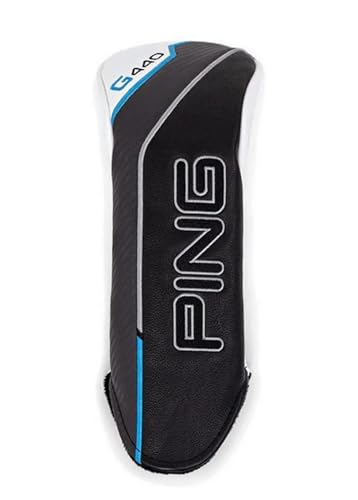
- Technology: Carbonfly wrap crown, Facewrap technology
- Lofts: 17° to 34° (8 loft options)
- Adjustability: Hosel sleeve ±1.5°
- Best For: All skill levels, widest loft range
- Price: $275–$325
Ping’s G440 Hybrid continues the G-series tradition of building reliable, well-engineered equipment with excellent fitting options. The Carbonfly wrap crown saves significant weight that Ping uses to push the center of gravity lower and further back than previous G-series models, improving launch and reducing spin for more penetrating ball flight. The Facewrap technology — a wrap-around face design — extends the spring effect across a wider face area for more consistent ball speed. The result is a hybrid that Ping’s fitting data shows performs across a wider range of swing speeds and tendencies than most competitors.
The loft range (17° through 34° in eight options) is unmatched in the hybrid category — you can configure a G440 Hybrid to fill virtually any gap in your bag. The adjustable hosel adds another degree of customization. Ping’s fitting infrastructure means there are knowledgeable fitters who can spec a G440 precisely to your swing in most golf markets. That fitting advantage compounds over time as you build a relationship with a fitter who knows your game.
The G440 is slightly more expensive than TaylorMade and Callaway alternatives, and it doesn’t have the “newest” technology headline of AI-optimized faces or the Max Rescue’s extreme forgiveness focus. But it’s genuinely good at everything — distance, forgiveness, versatility, fitting options — and Ping’s quality consistency across production runs is some of the best in the industry.
Cleveland Launcher Halo XL Hybrid

- Technology: Halo sole, HiBore Crown, Hollow Body
- Lofts: 3H (18°), 4H (21°), 5H (24°), 6H (28°)
- Adjustability: None
- Best For: Maximum forgiveness, seniors, slower swings
- Price: $200–$250
The Cleveland Launcher Halo XL Hybrid takes the same design philosophy as Cleveland’s iron line and applies it to the hybrid category: if the ball gets airborne consistently and stays in play, golfers play better golf and enjoy the game more. The Halo sole — the defining feature of the XL range — positions the leading edge high enough off the ground that turf contact doesn’t derail the shot. Combined with the HiBore Crown that moves weight low in the head, the Halo XL produces a high, forgiving ball flight that requires minimal precision from the golfer.
For beginners, high-handicappers, seniors, and anyone who has struggled to hit traditional hybrids consistently, the Halo XL is the most sympathetic design available. It’s not the most versatile or adjustable hybrid — Cleveland didn’t include hosel adjustability in the XL’s design. But it’s excellent at its core mission: getting the ball in the air from any lie with a forgiving strike zone that forgives the inevitable mishits of high-handicap play.
Golfers who find they’ve grown out of the Halo XL’s forgiveness focus can step up to a standard Launcher XL or across to a TaylorMade or Callaway product. But for the large percentage of recreational golfers who just want a reliable, high-launching hybrid that stays in play, the Halo XL earns its spot in the bag.
Cobra Darkspeed Adapt Hybrid

- Technology: Baffler Rails, Hollow Carbon Body, PWR sleeve
- Adjustability: PWR sleeve ±1.5° plus draw/neutral settings
- Best For: Game improvement with adjustability
- Price: $225–$275
Cobra’s Darkspeed Adapt Hybrid is the most customizable option in this guide below the $300 mark. The PWR sleeve system provides loft and lie adjustment, and the draw/neutral face angle settings give you meaningful control over shot shape tendency — useful for golfers who know they fight a slice and want built-in correction without buying a specialty draw-bias model. The Baffler rails on the sole are Cobra’s proprietary turf interaction technology that prevents the sole from catching on grass, particularly from rough lies.
The hollow carbon body construction keeps weight low and rearward while the carbon crown saves mass for redistribution. Ball speed is strong — Cobra’s CNC milled face creates consistent thickness for fast, predictable response across the face. The Darkspeed Adapt splits the market between pure game-improvement designs (Halo XL, Qi35 Max) and players’ hybrids (TSR2), offering a middle ground with genuine adjustability at a fair price.
For golfers who like to tinker with their setup — adjusting loft seasonally for course conditions, dialing in draw bias when the slice returns, fine-tuning trajectory — the Darkspeed Adapt provides that flexibility at a price that doesn’t punish you for wanting it. At $225-$275, it’s a strong value proposition in the adjustable hybrid segment.
Titleist TSR2 Hybrid

- Technology: SureFit hosel, Variable Face Thickness
- Lofts: 17°, 19°, 21°, 24°
- Adjustability: SureFit hosel (loft + lie)
- Best For: Mid-handicappers, shot workability
- Price: $300–$350
Titleist builds the TSR2 Hybrid for golfers who have their swing developed enough to take advantage of a more precise, workable club. The TSR2 is not the easiest hybrid to hit in this guide — it has a slightly smaller head profile and less forgiveness on extreme mishits than the Qi35 Max or Halo XL. What it offers instead is workability: the ability to shape shots from right-to-left and left-to-right intentionally, and a ball flight that responds to your shot-shaping inputs rather than automatically correcting toward neutral. For golfers who shoot in the 80s or better and want a hybrid that behaves like a controlled precision tool, the TSR2 is the best option here.
The SureFit hosel allows independent loft and lie adjustment — you can adjust loft without changing the face angle, and lie angle without changing loft. This precision fitting capability is a Titleist hallmark and is genuinely useful for golfers who’ve been properly fitted. Variable Face Thickness maintains ball speed across the face while delivering the focused performance character that Titleist products are known for.
Don’t buy a Titleist TSR2 if you’re a beginner or high-handicapper hoping it will fix inconsistency — it won’t. The TSR2 rewards ball-striking ability with precise performance; it doesn’t manufacture it. But for a 10-handicapper or better who wants a proper tour-influenced hybrid to complement a precision iron set, the TSR2 is the most authentic option in this guide.
Mizuno ST-X 220 Hybrid

- Technology: Wave sole, face cup, lightweight carbon crown
- Lofts: 20°, 23°, 26°
- Best For: Mid-handicappers seeking Mizuno feel
- Price: $175–$225
Mizuno’s hybrid lineup has been somewhat under the radar compared to their iron reputation, but the ST-X 220 deserves attention for golfers who value feel alongside performance. The Wave sole — a series of undulating ridges along the sole — creates a spring-like effect at impact while also improving turf interaction from difficult lies. Combined with a lightweight carbon crown for low CG positioning, the ST-X 220 delivers a ball flight that’s high, controlled, and — in Mizuno’s fashion — surprisingly communicative for a game-improvement design.
Golfers who’ve used Mizuno irons and love the feedback will find the ST-X 220 speaks the same language. The impact feel tells you where on the face you made contact, whether the strike was pure or slightly off, in a way that more muted designs don’t. For a golfer developing their game who wants feedback alongside forgiveness, this hybrid provides a useful balance. The price — $175-$225 for a used or discounted model — represents genuine value for a Mizuno product.
The limitation is that the ST-X 220 is a couple of model years old at this point, which means you may find it discounted or need to look beyond first-run availability. The technology inside is still competitive with current offerings, and Mizuno’s engineering doesn’t age quickly. A good deal on an ST-X 220 is worth taking if you find one.
Tour Edge Exotics E723 Hybrid
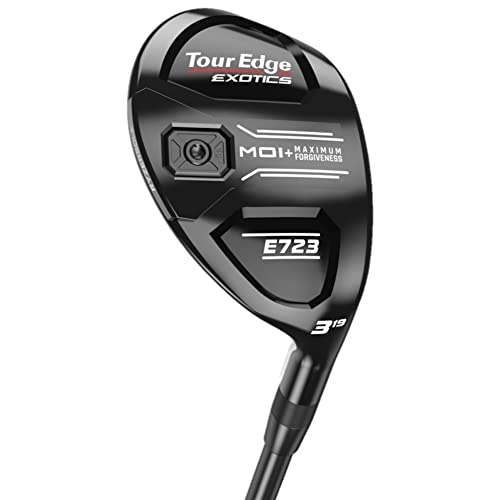
- Technology: C300 Maraging Steel face, carbon composite crown
- Lofts: 2H (16°) through 6H (28°)
- Best For: Value-conscious golfers wanting premium materials
- Price: $175–$225
Tour Edge’s Exotics line represents the brand’s premium engineering tier, and the E723 Hybrid brings premium materials — C300 Maraging Steel in the face, carbon composite crown — to a price point significantly below the big-name competition. Maraging steel is extraordinarily strong, allowing Tour Edge to engineer a thinner, faster face than standard steel permits while maintaining durability. The carbon crown saves weight for low, rearward CG positioning. These are materials and technologies you’d expect to find in $300+ hybrids from Callaway or TaylorMade.
The result in performance: ball speed from the E723 competes directly with premium-priced competitors in independent testing. Tour Edge doesn’t have the marketing budget of the major brands, so you pay for the club rather than the advertising. The E723 covers lofts from a 2-hybrid (16°) through a 6-hybrid (28°), making it one of the most comprehensive loft ranges available. For golfers replacing multiple long irons, you can configure your full hybrid setup from a single model family.
Tour Edge’s after-sale support is solid, and the value proposition is the strongest in this guide. If you’re a value-conscious buyer who researches equipment carefully and doesn’t need a famous logo on your club, the Tour Edge Exotics E723 delivers premium performance at a price that leaves money for lessons, range fees, or your next round.
Buyer’s Guide: Choosing the Right Hybrid
1. Identify the Gap You’re Trying to Fill
Before buying a hybrid, know exactly what distance gap you’re trying to fill. Hit your current longest iron to determine your average carry distance, then hit your shortest fairway wood. The gap between those two numbers is where your hybrid needs to perform. Most golfers need one or two hybrids to fill that gap — a 3-hybrid (19-21°) and a 4-hybrid (22-24°) is a common configuration. Don’t buy multiple hybrids until you’ve confirmed each one fills a real distance gap in your setup.
2. Match Forgiveness to Your Skill Level
Hybrids exist on the same forgiveness spectrum as irons — from maximum game-improvement designs (Halo XL, Qi35 Max) to precise tour-style options (Titleist TSR2). Match the forgiveness level to your current ball-striking consistency. If you’re a beginner or high-handicapper, maximum forgiveness is the right call — you need the Halo XL or Qi35 Max. If you’re a 5-10 handicap who strikes the ball reasonably reliably, the standard Ping G440 or Cobra Darkspeed gives you a better balance of forgiveness and workability.
3. Consider Adjustability
Adjustable hosels allow you to change loft and sometimes lie angle, which matters for trajectory tuning and ensuring the club is properly fitted to your posture. For golfers who are still developing their swing, adjustability is a valuable feature — you can dial in the loft as your distances change. For golfers with a stable, consistent swing who’ve been properly fitted, fixed hosels are fine. Several excellent hybrids in this guide (TaylorMade, Callaway, Cobra) offer hosel adjustability; the Cleveland and Mizuno options are fixed.
4. Test from Rough and Tight Lies
A hybrid that performs well from a perfect fairway lie but struggles from rough or tight lies isn’t serving your full game. The best hybrids feature sole designs (Baffler rails, Halo sole, Wave sole) that improve performance from difficult lies by preventing the leading edge from digging or the sole from bouncing. When you’re testing hybrids, hit shots from rough and closely mown areas, not just clean range mats. The club that performs best from varied lies is the club you’ll rely on most during actual rounds.
The Cleveland Launcher Halo XL is the easiest hybrid to hit in this guide — the widest sole and highest launch in the group. The TaylorMade Qi35 Max Rescue is a close second with its Thru-Slot Speed Pocket and Max profile for maximum forgiveness.
Yes, for most golfers below a 10 handicap. Hybrids have a lower center of gravity and wider sole that makes them easier to hit from fairway and rough lies. Only highly skilled players with fast swing speeds and excellent ball-striking typically benefit from long irons at the same lofts.
A 26-28 degree hybrid typically replaces a 5-iron. A 23-25 degree hybrid replaces a 4-iron. A 19-21 degree hybrid replaces a 3-iron. Always check your iron set’s actual loft and find a hybrid with 1-2 degrees more loft to ensure proper gapping.
Yes — hybrids are superior to long irons from rough in most conditions. The wide sole prevents digging and the larger sweet spot maintains distance even when grass grabs the hosel. From very thick rough, a hybrid still won’t perform perfectly, but it outperforms a long iron in the same conditions.
Most golfers benefit from 1-3 hybrids replacing the 3, 4, and sometimes 5-iron. The specific number depends on your set makeup and where your iron distance consistency falls off. If your 5-iron is reliable, one or two hybrids at 3 and 4-iron equivalents is sufficient.
Frequently Asked Questions
What is the easiest hybrid golf club to hit?
Should I carry hybrids instead of long irons?
What degree hybrid replaces a 5 iron?
Can a hybrid be used from the rough?
How many hybrids should I carry?