
What’s in this guide
The driver is the most expensive single club in your bag, the hardest to hit consistently, and the one with the biggest impact on your score off the tee. It’s also the club where most golfers make the worst buying decisions — usually by chasing whatever the Tour pros are playing without considering whether it actually fits their swing.

This guide walks you through every spec that matters when choosing a driver, explains what each one actually does to your ball flight, and helps you figure out the right setup for your game. No marketing fluff, just the stuff that actually affects how the ball comes off the face.
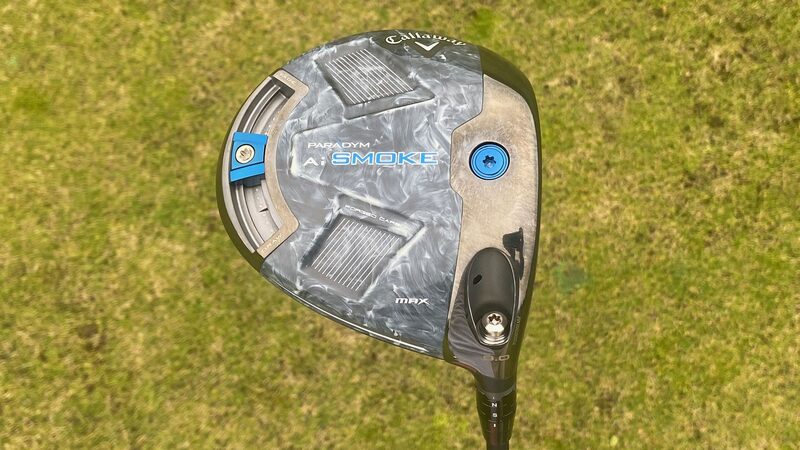
Loft: The Most Misunderstood Spec
Loft is the angle of the clubface relative to vertical. More loft means a higher launch angle. Here’s the thing most golfers get wrong: more loft almost always means more distance for amateur swing speeds.
The average male amateur swings a driver around 93 mph. At that speed, the optimal launch conditions require more loft than you think. Here’s a rough guide:
- Under 85 mph swing speed: 12-13 degrees of loft
- 85-95 mph: 10.5-12 degrees
- 95-105 mph: 9.5-10.5 degrees
- 105+ mph: 8.5-10 degrees
Most amateurs play too little loft. They see Tour pros using 9-degree drivers and assume that’s what they need. But Tour pros swing at 115+ mph and compress the ball differently. At 90 mph, a 9-degree driver produces a low, spinning trajectory that hits the ground early and rolls out — but the total distance is less than what a properly launched 10.5 or 12 degree driver achieves.
If you slice the ball, higher loft also helps. More loft reduces the effect of sidespin, which means your slice curves less. Going from 9.5 to 12 degrees won’t fix a slice, but it’ll make it more manageable.
Shaft Flex: Matching Your Swing Speed
The shaft is the engine of the driver. Flex refers to how much the shaft bends during the swing, and it directly affects your launch angle, spin, and accuracy. Here’s the general breakdown:
- Ladies (L): Under 60 mph swing speed
- Senior (A): 60-75 mph
- Regular (R): 75-95 mph
- Stiff (S): 95-110 mph
- Extra Stiff (X): 110+ mph
A shaft that’s too stiff for your swing speed will feel dead and produce a low ball flight. A shaft that’s too flexible will feel whippy, launch the ball too high with too much spin, and be harder to control.
The ego trap: Most amateur men should be playing Regular flex. There’s no shame in it. But the majority play Stiff because it sounds more impressive. If your swing speed is 90 mph and you’re playing a Stiff shaft, you’re leaving distance on the table.
Shaft weight matters too. Heavier shafts (65-75g) offer more control but slightly less speed. Lighter shafts (40-55g) help generate speed but can feel less stable. Most stock shafts run 55-65g, which is a good middle ground.
Head Size: 460cc vs. Smaller Heads
The USGA limits driver heads to 460cc, and virtually every modern driver maxes that out. There’s good reason: a bigger head means a bigger sweet spot (technically, a larger MOI — moment of inertia). Off-center hits lose less ball speed and curve less with a 460cc head.
You might see some “tour” or “compact” driver heads around 440-450cc. These are designed for skilled players who prioritize workability (the ability to shape shots) over forgiveness. Unless you’re a single-digit handicap who intentionally curves the ball both ways, stick with 460cc.
Head shape also matters. Some 460cc heads are deeper from front to back (producing a higher MOI and more forgiveness), while others are more shallow (lower spin, preferred by faster swingers). The deeper, rounder heads are more forgiving; the flatter, more triangular heads are more workable.

Adjustability: What Those Weights and Hosels Do
Modern drivers come loaded with adjustability features. Here’s what they actually do:
Adjustable Hosel (Loft Sleeve)
Almost every driver now has an adjustable hosel that lets you change the loft by 1-2 degrees in either direction. A 10.5-degree driver might adjust anywhere from 9 to 12 degrees. This is incredibly valuable because it lets you dial in your launch conditions without buying a new driver.
The hosel also affects face angle — when you add loft, the face closes slightly (promoting a draw), and when you reduce loft, it opens slightly (promoting a fade). This is a subtle but real effect.
Movable Weights
Some drivers have sliding or interchangeable weights, usually on the sole. Moving weight toward the heel promotes a draw. Moving it toward the toe promotes a fade. Moving it toward the back increases forgiveness and launch height. Moving it toward the front reduces spin.
For most golfers, starting with the weight in the back/heel position (high launch, draw bias) is a good default. You can fine-tune from there.
Do You Need All This Adjustability?
Honestly? The adjustable hosel is extremely useful. Movable weights are a nice bonus but most golfers set them once and never touch them again. Don’t pay a huge premium for a weight system you won’t use — but do prioritize an adjustable hosel.
Shaft Length and Weight
Standard driver length is around 45.5 inches. Some manufacturers push toward 46 inches for more speed. Here’s the trade-off: longer shafts can generate more club head speed but are harder to control.
Bryson DeChambeau famously experimented with a 48-inch driver (the old max length). It went far. It also went sideways — a lot. The USGA has since capped driver length at 46 inches.
Many professional fitters recommend going slightly shorter than standard — around 44.5-45 inches — for better consistency. The speed loss is minimal (1-2 mph), and the accuracy gain is significant because you’re striking the center of the face more often. A centered hit at 93 mph goes further than a toe hit at 95 mph.
If you’re struggling with consistency off the tee, ask about a shorter shaft before you change anything else. It’s one of the cheapest and most effective modifications you can make.
Do You Need a Professional Fitting?
Short answer: yes, if you can afford it. A driver fitting with a qualified fitter typically costs $100-200 and takes about an hour. Here’s what you get:
- Your actual swing speed, launch angle, and spin rate measured on a launch monitor
- Head-to-head comparison of different driver heads and shafts
- Optimized loft, shaft flex, shaft weight, and shaft length for your swing
- Data-backed recommendations instead of guesswork
The difference between a fitted driver and an off-the-rack guess can be 10-20 yards and a significantly tighter dispersion pattern. That’s not marketing hype — it’s physics. The shaft alone can account for a 15-yard difference in carry distance.
Where to get fitted: Club Champion, True Spec Golf, and most golf retail stores (Golf Galaxy, PGA Tour Superstore) offer fittings. Many will apply the fitting fee toward the purchase of a driver. Even big-box stores like Golf Galaxy have launch monitors and a decent shaft selection.
If you absolutely can’t get fitted, at least know your swing speed. Many driving ranges have swing speed radars, or you can estimate it from your typical carry distance with a 7-iron (multiply by roughly 2.5 for a ballpark driver swing speed).
Common Mistakes to Avoid
- Buying too little loft. This is the number one mistake. If you don’t swing 100+ mph, you almost certainly need more than 9 degrees.
- Playing too stiff a shaft. The “ego flex” problem is real. Be honest about your swing speed.
- Chasing the newest model every year. Driver technology improves incrementally. A 2024 driver is not meaningfully worse than a 2026 model at the same price point. Last year’s models at a discount are often the smartest buy.
- Ignoring the shaft. The head gets all the marketing attention, but the shaft has more influence on your ball flight. A $300 head with the wrong shaft performs worse than a $150 head with the right shaft.
- Copying Tour pros. They swing 20+ mph faster than you, have completely different launch conditions, and are fit by the best fitters in the world. Their setup is optimized for their swing, not yours.
- Not trying before buying. Hit the driver before you commit. Many golf shops have simulators or hitting bays. At minimum, use their return policy if you buy online.
Where to Start Shopping
Once you know your ideal specs (loft, shaft flex, head size), finding the right driver gets a lot easier. We’ve tested and reviewed the top drivers on the market in our Best Golf Drivers guide, with picks at every price point from budget to premium.
A few general rules for shopping smart:
- Last year’s model is almost always the best value. When the 2026 models drop, the 2025 versions go on clearance — same performance, 30-50% off.
- Used drivers in good condition are an excellent option. A two-year-old flagship driver from a major brand is still a fantastic club.
- Don’t skip the shaft. If you buy a driver head you love but the stock shaft doesn’t fit, budget $50-150 for an aftermarket shaft. It’s worth it.
Frequently Asked Questions
Most beginners should start with 10.5 or 12 degrees of loft. Higher loft makes the ball easier to get in the air, reduces the severity of slices, and generally produces more distance at slower swing speeds. There’s a persistent myth that lower loft equals more distance, but for most beginners, the opposite is true.
There’s no set timeline. If your current driver is properly fitted to your swing, it can last 5-10 years. Driver technology improves gradually — the gains from a 3-year-old driver to a brand new one are maybe 2-5 yards at most. Replace your driver when your swing changes significantly (you gain or lose speed), when it’s physically damaged, or when you get properly fitted and the data shows a clear improvement with a different setup.
For most golfers, yes. An adjustable hosel lets you fine-tune loft by 1-2 degrees without buying a new driver. If your swing changes over time or you want to experiment with different launch conditions, adjustability saves money. The only downside is a very slight weight increase in the hosel area, which is negligible for all but the most elite players.
Not necessarily. The USGA limits how much spring effect (COR) a driver face can have, so all legal drivers have similar maximum ball speed on center strikes. What expensive drivers do better is maintain ball speed on off-center hits — they’re more forgiving. If you hit the center consistently, a $200 driver performs nearly identically to a $600 one. If your strikes are all over the face, the expensive driver will average more distance.
A draw-biased driver has extra weight in the heel area of the club head, which encourages the face to close through impact — producing a right-to-left ball flight for right-handed golfers. If you consistently slice the ball (left-to-right curve), a draw-biased driver can reduce that tendency. Standard or “tour” models have more neutral weighting for players who don’t need slice correction. Draw bias won’t fix a major swing flaw, but it can reduce a moderate slice by 5-15 yards of curve.
More Buying Guides
- Best Blade Putters 2026: 8 Classic Putters for Feel and Precision
- Best Golf Wedges 2026: 8 Wedges for Every Swing and Budget
- Best Golf Drivers 2026: 8 Drivers Tested for Every Swing Type
- Best Mallet Putters 2026: 8 Models for Every Stroke and Budget
- Best Drivers for Beginning Golfers 2026: 8 Forgiving Drivers That Launch Easy
- Best Golf Grips 2026: 8 Grips for Better Feel and Control
Improve Your Game
Best Rangefinders • Distance Calculator • Best Beginner Clubs