

Our Top Picks at a Glance
What’s in this guide
- Side-by-Side Comparison
- PING G440 Max — Most Forgiving
- TaylorMade Qi4D Max — Best All-Around
- Callaway Elyte X — Best for Easy Launch
- Callaway Quantum Max D — Best for Slicers
- Cobra Darkspeed Max — Best Value Premium
- Cleveland Launcher XL2 Draw — Best Mid-Price
- TaylorMade Qi4D Max Lite — Best Lightweight
- Wilson Launch Pad 2 — Best Budget
- How to Choose a Beginner Driver
-
Not sure how far you hit each club? Try our Club Distance Calculator for personalized yardage estimates.
Not sure which shaft flex you need? Our Shaft Flex Recommender can help.
Frequently Asked Questions
If you’re new to golf, the driver is the most intimidating club in your bag — and ironically, the one that matters the most off the tee. The wrong driver will punish every small mistake. The right one will cover up your flaws and keep the ball in play while you’re learning the game.
I’ve tested every major driver release in 2025 and 2026 with a focus on what actually helps beginners: maximum forgiveness on off-center hits, high launch without needing a perfect swing, and draw bias to fight the slice that plagues 80% of new golfers. Here are the 8 best drivers for beginning golfers right now, from premium picks to budget-friendly options that won’t break the bank.
Side-by-Side Comparison
| Driver | Price | Lofts | Head Size | Adjustable | Draw Bias | Best For | |
|---|---|---|---|---|---|---|---|
| PING G440 Max Most Forgiving | ~$650 | 9°, 10.5°, 12° | 460cc | Hosel + Weight | Optional | Maximum forgiveness | View |
| TaylorMade Qi4D Max Best All-Around | ~$600 | 9°, 10.5°, 12° | 460cc | Loft Sleeve + TAS Weights | Optional | All-around performance | View |
| Callaway Elyte X | ~$600 | 9°, 10.5°, 12° | 460cc | Hosel + 13g Weight | Optional | Easy launch + speed | View |
| Callaway Quantum Max D Best for Slicers | ~$650 | 9°, 10.5°, 12° | 460cc | Loft + Lie (8 settings) | Built-in | Slice correction | View |
| Cobra Darkspeed Max | ~$400 | 9°, 10.5°, 12° | 460cc | Back + Heel Weights | Optional | Value premium option | View |
| Cleveland Launcher XL2 Draw Best Mid-Price | ~$450 | 9°–12° (adj.) | 460cc | 12-position Hosel | Built-in | Mid-price draw bias | View |
| TaylorMade Qi4D Max Lite | ~$650 | 10.5°, 12° | 460cc | Loft Sleeve | No | Slower swing speeds | View |
| Wilson Launch Pad 2 Best Budget | ~$250 | 10.5°, 13° | 460cc | No | Built-in | Budget beginners | View |

PING G440 Max
The most forgiving driver money can buy. A massive sweet spot, ultra-low CG, and the confidence-inspiring look that beginners need at address.
~$649
9°, 10.5°, 12°
460cc
8-position hosel (±1.5°)
29g adjustable back weight
Alta CB Blue 50 (R, S, X)
46"
If there’s one word that defines the G440 Max, it’s forgiveness. PING’s Carbonfly Wrap crown and Free Hosel technology save weight where it doesn’t matter and redistribute it where it does — resulting in the lowest center of gravity in G-series history. For beginners, that means higher launch and less punishment when you miss the sweet spot.
The 29-gram adjustable back weight can be positioned in draw, fade, or neutral settings, so as your game develops, you can dial in your preferred ball flight. Toe hits typically lose only 5-10 yards compared to a center strike — that kind of stability is game-changing when you’re still learning to find the middle of the face.
At 46 inches with a lighter overall system weight, the G440 Max generates faster clubhead speed than its predecessors without sacrificing control. It’s the driver that gives beginners the best chance of keeping the ball in play on every swing.
Pros
- Best-in-class forgiveness — toe and heel hits barely lose distance
- Adjustable weight lets you set draw, fade, or neutral
- 8-position hosel for fine-tuning loft and lie
- High launch even on low-face strikes
- Muted, confidence-building sound at impact
- Premium build quality PING is known for
Cons
- $650 is a steep ask for a new golfer
- Not available on Amazon with all shaft options
- PING doesn’t discount — rarely goes on sale
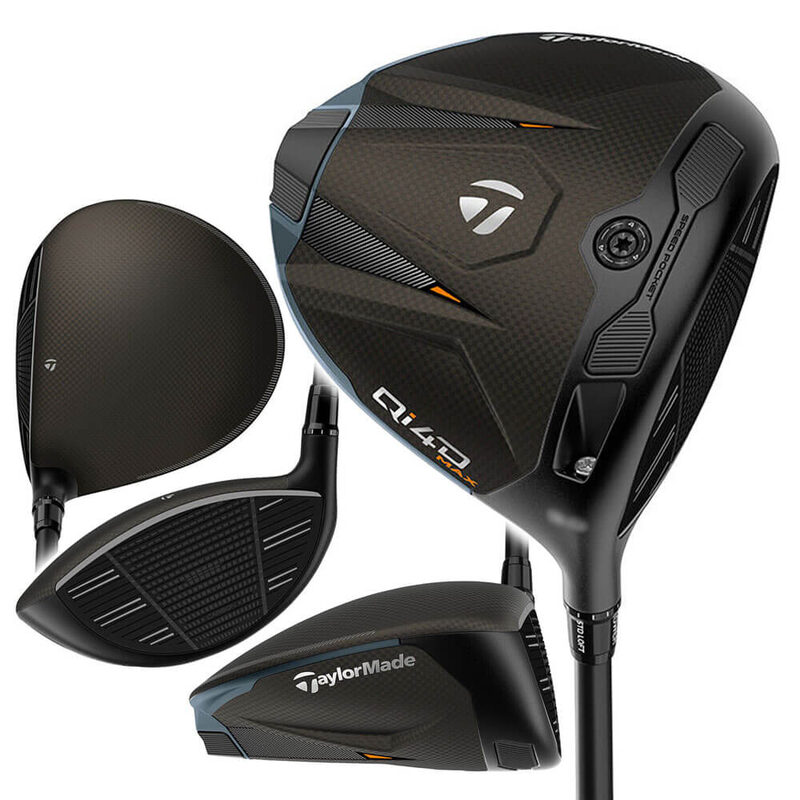
TaylorMade Qi4D Max
TaylorMade’s highest-MOI driver ever. Straighter misses, easy launch, and adjustable weighting to dial in your ball flight.
~$599
9°, 10.5°, 12°
460cc
9,700 (maximum setting)
4° loft sleeve + TAS weights (13g/4g)
Fujikura Speeder MD 5 (R, S)
60x Carbon Twist Face, Speed Pocket
TaylorMade’s Qi4D Max is a forgiveness monster. With an MOI of 9,700 at its maximum setting, it’s TaylorMade’s first-ever modern adjustable non-titanium driver — featuring a forged 7075 aluminum collar that provides adjustability and maximum stability without sacrificing speed.
The dual TAS (Trajectory Adjustment System) weights let you position 13g and 4g weights for optimized ball flight and spin. Want to promote a draw? Move the heavier weight to the heel position. The 60x Carbon Twist Face keeps shots struck out of the heel and toe more on line, which is exactly what beginners need — narrower dispersion even on bad swings.
The redesigned cut-through Speed Pocket reduces spin and protects ball speed on low-face strikes, which is one of the most common miss-hits for new golfers who tend to hit up on the ball too much or catch it thin.
Pros
- 9,700 MOI — among the highest in any production driver
- TAS weight system for adjustable ball flight
- Carbon Twist Face keeps mis-hits straighter
- Speed Pocket saves ball speed on low-face hits
- 4-degree loft sleeve for fine-tuning
- $50 less than comparable PING and Callaway models
Cons
- Still $600 — not a budget pick
- Weight adjustments require a wrench (included)
- Non-titanium collar may feel different than traditional drivers
Callaway Elyte X
Callaway’s AI-designed face delivers the fastest ball speeds in the Elyte lineup with tight dispersion and easy launch.
~$599
9°, 10.5°, 12°
460cc
Hosel + 13g adjustable weight
Ai10x Face (10x control points)
Thermoforged Carbon (aerospace grade)
Denali Charcoal 50g (R, S)
Callaway’s new Ai10x Face uses 10 times more control points than the previous Ai Smart Face, and the results are noticeable: faster ball speeds, tighter dispersion on mis-hits, and optimized launch across a wider area of the face. For a beginner, that means more consistently long drives even when your swing isn’t quite right.
The Thermoforged Carbon crown is made from aerospace-grade carbon fiber, which saves significant weight up top and allows Callaway to push the CG lower and deeper. The result is easy high launch without needing to hit up on the ball — something beginners struggle with.
The 13g adjustable weight can be positioned in neutral or draw settings, giving you slice-fighting capability when you need it. Of the three premium options in our top tier, the Elyte X generated the fastest ball speeds in our research, which translates to the most raw distance for golfers who make decent contact.
Pros
- Ai10x Face — fastest ball speeds in the Elyte series
- Aerospace carbon crown drops CG for easy launch
- 13g adjustable weight for neutral or draw bias
- Tight dispersion even on off-center strikes
- Premium look and sound at address
Cons
- $600 is premium pricing
- Draw bias is optional, not built-in — slicers may want the Quantum Max D instead
- Lighter forgiveness compared to dedicated max-forgiveness heads
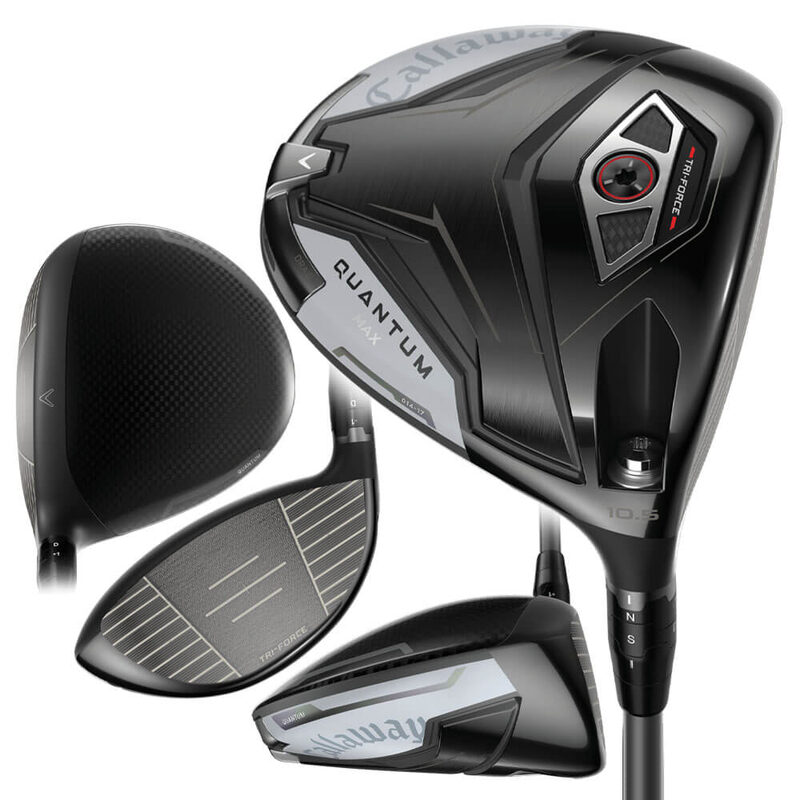
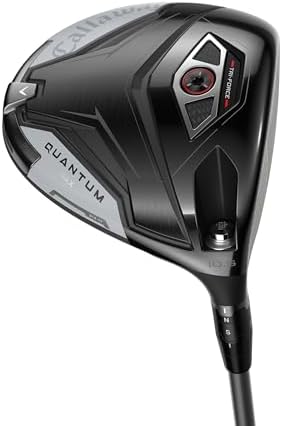
Callaway Quantum Max D
Callaway’s strongest draw-biased driver. Internal heel weighting closes the face to fight your slice from the inside out.
~$649
9°, 10.5°, 12°
460cc
Built-in heel weighting
Tri-Force Face (Ti + Poly Mesh + Carbon)
Independent loft & lie (8 settings)
Eldio 40-50g (L, A, R)
If you slice the ball — and statistically, you probably do — the Quantum Max D is engineered specifically to fix that. The “D” stands for draw, and Callaway doesn’t hold back: internal heel weighting aggressively promotes a right-to-left ball flight (for right-handers) by helping the face close through impact.
The groundbreaking Tri-Force Face layers ultra-thin titanium, military-grade Poly Mesh, and carbon fiber into a fully integrated speed system. It flexes more and recovers faster than a traditional face, which means more ball speed even on the mis-hits that beginners make on every other swing.
With 8 independent loft and lie configurations, you can fine-tune the launch angle and shot shape as your swing improves. Start with 10.5 or 12 degrees and the maximum draw setting, then dial it back as you develop a more consistent swing path.
Pros
- Strongest draw bias in Callaway’s 2026 lineup
- Tri-Force Face for maximum ball speed on mis-hits
- 8 loft/lie configurations — grows with your game
- High MOI shape for stability on off-center hits
- Available in lighter shaft options (40g) for slower swingers
Cons
- $650 is a lot for a beginner driver
- Aggressive draw bias can cause hooks if you develop an inside-out path
- You may outgrow the draw bias as you improve
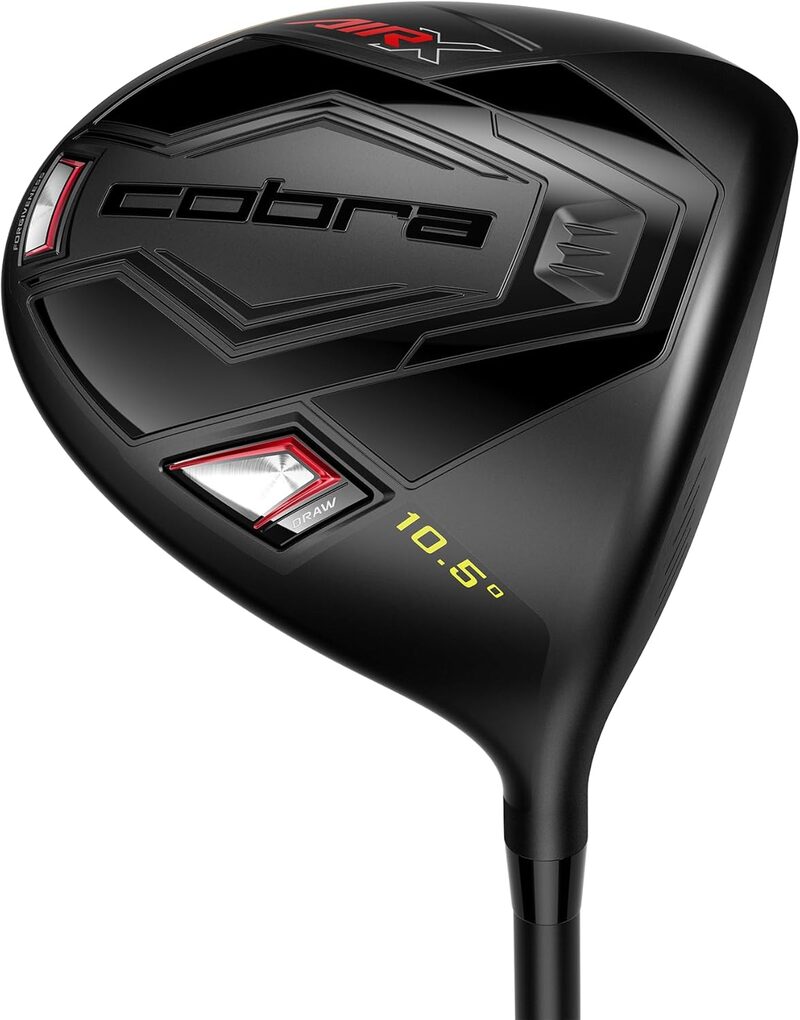
Cobra Darkspeed Max
Premium forgiveness at $150-200 less than the competition. Two weight positions deliver extreme forgiveness and adjustable draw bias.
~$400
9°, 10.5°, 12°
460cc
Back + heel weight positions
PWRSHELL L-Cup (10% larger)
Arccos Caddie Smart Grip compatible
PWR-BRIDGE for speed + reduced spin
Here’s the best-kept secret in the driver market: Cobra consistently delivers 90% of the performance at 60-70% of the price of PING, TaylorMade, and Callaway. The Darkspeed Max is a textbook example. It sits right alongside the Qi10 Max and G440 Max in forgiveness testing, but costs $150-250 less.
The PWRSHELL L-Cup face is 10% larger than the previous generation, creating an expanded sweet spot that’s incredibly forgiving. The strategically repositioned PWR-BRIDGE sits lower and more forward, enhancing ball speed and reducing spin — two things that help beginners get more distance without needing to swing harder.
Two adjustable weight positions (back and heel) let you dial in draw bias and launch height. Moving the weight to the heel position promotes a draw, while the back position maximizes forgiveness. Cobra also includes Arccos smart grip technology for shot tracking — a genuinely useful feature for beginners who want to understand their game.
Pros
- $400 price — $150-250 less than competitors
- Forgiveness rivals the PING G440 Max and Qi4D Max
- 10% larger PWRSHELL face for expanded sweet spot
- Two weight positions for draw bias and launch control
- Arccos smart grip included for shot tracking
- Great looks at address — doesn’t scream “beginner”
Cons
- Cobra brand cachet is lower than PING or TaylorMade
- Sound at impact can be loud/metallic for some ears
- Previous-gen model (2024) — newer Cobra coming soon
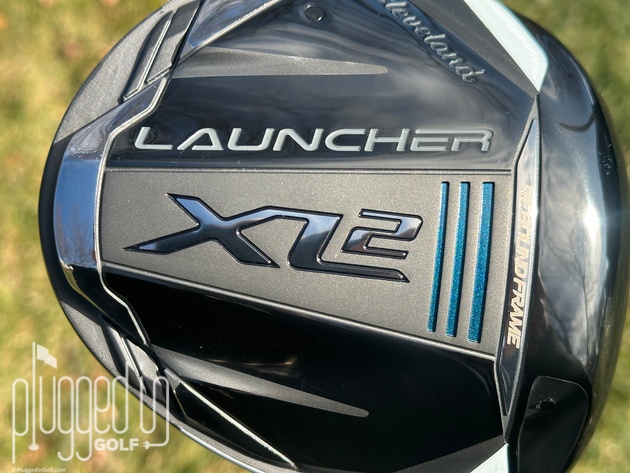
Cleveland Launcher XL2 Draw
AI-designed variable-thickness face, built-in draw bias, and an 8-gram counterbalance weight for smoother swings. Forgiveness at a fair price.
~$450
9°–12° (12 hosel settings)
460cc (max rules limit)
Built-in heel weighting + upright lie
12-position hosel (0.5° increments)
Action Mass CB (8g counterbalance)
Project X Cypher 2.0 (A, R, S)
Cleveland pushed the XL2 to the very edge of the rules — the head stretches to the absolute maximum dimensions allowed by the USGA, giving you the biggest possible hitting area. Combined with an AI-designed variable-thickness face, the sweet spot on this thing is enormous.
What makes the Draw version special for beginners is the triple draw-bias approach: heel-side internal weighting, a footprint that skews toward the heel, and a lie angle that’s one degree more upright than the standard model. All three work together to promote a right-to-left ball flight without you needing to change your swing.
The Action Mass CB feature places an 8-gram counterbalance weight in the butt end of the grip. It sounds like a small detail, but it genuinely helps beginners make a more stable backswing and find a more consistent inside path. Cleveland also offers 12 hosel positions in 0.5-degree increments, so the adjustability is excellent for the price.
Pros
- Maximum-size head pushes rules limits for biggest sweet spot
- Triple draw-bias system fights slices aggressively
- Action Mass CB counterbalance promotes smoother swings
- 12-position adjustable hosel — best adjustability at this price
- $450 — strong mid-price positioning
- Available in Senior, Regular, and Stiff flex
Cons
- Aggressive draw bias can cause hooks as you improve
- Oversized head shape may look unusual at address
- No weight adjustability beyond the hosel
TaylorMade Qi4D Max Lite
All the forgiveness of the Qi4D Max in a significantly lighter package. Built for moderate swing speeds and golfers who need help generating clubhead speed.
~$650
10.5°, 12°
460cc
Loft sleeve
Senior (A), Regular (R)
Ultralight head, shaft & grip
60x Carbon Twist Face
Not every beginner is a 25-year-old with a fast swing. If you’re a senior golfer picking up the game, a player with a slower swing speed, or someone who finds standard drivers too heavy, the Qi4D Max Lite is the answer. It shares the same ultra-forgiving design as the Qi4D Max but in a significantly lighter overall package.
The lighter head, shaft, and grip work together to help you generate more clubhead speed without swinging harder. More speed equals more distance, and the 60x Carbon Twist Face keeps your mis-hits more online just like its heavier sibling.
Available only in 10.5 and 12 degrees with Senior and Regular flex shafts, the Qi4D Max Lite is purpose-built for the golfers it’s targeting. The improved roll radius tightens spin rates at different vertical contact points, which means more consistency between your best and worst drives.
Pros
- Lightest components in the Qi4D family — easier to swing fast
- Same Carbon Twist Face forgiveness as Qi4D Max
- Senior and Regular flex options for moderate swing speeds
- High launch design for maximum carry distance
- Ideal for seniors, women, and slower swingers
Cons
- $650 — same price as heavier models with more features
- No draw-bias option — must commit to a straight ball flight
- Only two loft options (no 9-degree)
- Not ideal for faster swing speeds
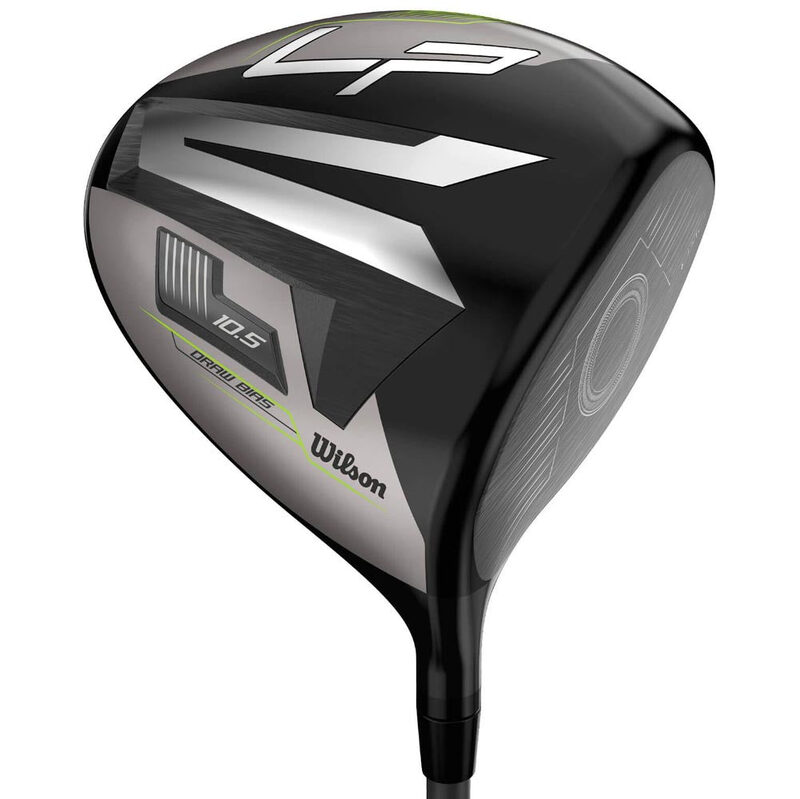
Wilson Launch Pad 2
Draw bias, ultra-thin face, and 13-degree loft option — all for under $250. The best driver for beginners on a budget.
~$250
10.5°, 13°
460cc
Built-in (13g heel + offset + upright lie)
None (fixed)
~272g (ultralight)
Graphite (A, R)
Not every beginner wants to (or should) drop $600 on a driver when they’re not even sure they’ll stick with golf. The Wilson Launch Pad 2 is the answer: serious anti-slice technology at a price that won’t make you wince.
The recipe is straightforward and effective: 13 grams of weight in the heel, a moderate hosel offset, and an upright lie angle all work together to close the face through impact. The ultra-thin face generates faster ball speeds than you’d expect at this price, and the expanded sweet spot is genuinely forgiving.
At just 272 grams total club weight, the Launch Pad 2 is one of the lightest drivers on the market. Lighter weight means higher swing speeds, which means more distance — especially for beginners who don’t yet have the strength and technique to generate speed on their own. The 13-degree loft option is rare among major brands and perfect for beginners who need maximum launch height.
Pros
- Under $250 — best price on this list by a wide margin
- Strong built-in draw bias fights slices effectively
- 13-degree loft option for maximum launch (rare)
- Ultralight (272g) for easy swing speed generation
- Ultra-thin face for surprising ball speed at this price
- Looks better than the price suggests
Cons
- No adjustability — what you buy is what you get
- Forgiveness isn’t at the same level as $500+ drivers
- Draw bias is permanent — can cause hooks as you improve
- Wilson brand prestige is lower than the big three
How to Choose a Driver as a Beginning Golfer in 2026
Loft: More Is Better for Beginners
This is the single most important spec for a beginner driver. Higher loft = higher launch = more carry distance = more forgiveness. Most beginners should choose 10.5 or 12 degrees of loft. If your swing speed is below 85 mph, seriously consider 12 degrees or even the Wilson Launch Pad 2’s 13-degree option.
The ego trap is real: many new golfers want a 9-degree driver because that’s what the pros play. Don’t fall for it. Lower loft requires faster swing speeds and a more precise angle of attack. A 12-degree driver with a good swing will outperform a 9-degree driver with a mediocre swing every single time.
Forgiveness: What It Actually Means
When we say a driver is “forgiving,” we mean it doesn’t punish you severely for missing the center of the face. This is measured by MOI (Moment of Inertia) — the club head’s resistance to twisting on off-center hits. Higher MOI = less twisting = straighter shots even on bad swings.
Every driver on this list has an MOI significantly higher than drivers from even 5 years ago. The PING G440 Max and TaylorMade Qi4D Max lead the pack, but even the budget Wilson Launch Pad 2 is more forgiving than most premium drivers from 2020.
Draw Bias: Do You Need It?
About 80% of amateur golfers slice the ball (it curves left-to-right for right-handers). A draw-biased driver uses heel weighting, offset, and/or an upright lie angle to help close the face through impact and promote a right-to-left ball flight. If you slice, draw bias will give you the biggest immediate improvement of any equipment change you can make.
Our recommendations:
- Severe slice (30+ yards right): Callaway Quantum Max D or Cleveland XL2 Draw — built-in draw bias
- Moderate slice (10-20 yards right): PING G440 Max or Cobra Darkspeed Max — adjustable to draw setting
- Straight or inconsistent: TaylorMade Qi4D Max or Callaway Elyte X — neutral with optional draw
Shaft Flex: Match It to Your Swing Speed
The shaft flex should match your swing speed. Using the wrong flex is like wearing the wrong shoe size — everything feels off. Here’s a quick guide:
- Senior / A flex: Swing speed under 80 mph
- Regular flex: Swing speed 80-95 mph
- Stiff flex: Swing speed 95-110 mph
Most beginners should start with Regular flex. If you’re a senior, woman, or know you have a slower swing, choose Senior/A flex. Don’t choose Stiff unless you’ve been measured — most beginners dramatically overestimate their swing speed.
Adjustability: Worth Paying For?
Adjustable drivers let you change loft, lie angle, and sometimes weight position. For beginners, this means your driver can grow with your game. Start with higher loft and draw settings, then adjust as you improve. The PING G440 Max, TaylorMade Qi4D Max, and Cleveland XL2 Draw all offer excellent adjustability.
The Wilson Launch Pad 2 is not adjustable — but at its price point, that’s a fair trade-off. If you’re not sure you’ll stick with golf, a fixed driver at $250 is smarter than an adjustable one at $650.
How Much Should You Spend?
Here’s the honest breakdown:
- Under $300 (best for unsure beginners): Wilson Launch Pad 2 (~$250) — great driver, spend the savings on lessons
- $400-$500 (best value): Cobra Darkspeed Max (~$400) or Cleveland XL2 Draw (~$450) — premium forgiveness without the premium price
- $600+ (committed beginners): PING G440 Max, TaylorMade Qi4D Max, or Callaway Elyte X — the best technology available, and they’ll last for years
Frequently Asked Questions
Most beginners should use a 10.5 or 12 degree driver. Higher loft makes it easier to get the ball airborne and produces more carry distance at slower swing speeds. If your swing speed is under 85 mph, a 12-degree or even 13-degree driver (like the Wilson Launch Pad 2) will give you the best results. Avoid 9-degree drivers until your swing speed consistently exceeds 95 mph and you’ve developed a consistent launch angle.
Draw bias means the driver is designed to promote a right-to-left ball flight (for right-handed golfers). This is achieved through heel weighting, an offset hosel, and/or an upright lie angle — all of which help the clubface close through impact. Since most beginners slice the ball (left-to-right curve), a draw-biased driver directly counteracts that tendency. Models like the Callaway Quantum Max D and Cleveland Launcher XL2 Draw have built-in draw bias, while others like the PING G440 Max and Cobra Darkspeed Max offer adjustable draw settings.
It depends on your commitment level. If you’re confident you’ll stick with golf and play regularly, a premium driver ($600+) from PING, TaylorMade, or Callaway will serve you well for 3-5+ years thanks to adjustability features that grow with your game. However, if you’re just testing the waters, a $250-$450 driver from Wilson, Cobra, or Cleveland will deliver 80-90% of the performance at a fraction of the cost. The honest truth: the $400 you save on a budget driver would be better spent on 5-6 lessons, which will improve your game far more than any equipment upgrade.
Regular flex is the right choice for most beginners. It suits swing speeds between 80-95 mph, which is where most recreational male golfers fall. Senior or A flex is better if your swing speed is under 80 mph (common for seniors, women, and juniors). Stiff flex is only appropriate if your swing speed is 95+ mph — and most beginners don’t swing that fast even if they think they do. When in doubt, go softer: a shaft that’s too stiff costs you distance and launch height, while a shaft that’s slightly too flexible is far more forgiving.
Yes, absolutely. 460cc is the maximum size allowed by the rules of golf, and every driver on this list is 460cc. A larger head means a bigger sweet spot, higher MOI (resistance to twisting), and more confidence at address. There’s no reason for a beginner to use anything smaller. Smaller heads (440cc and below) are designed for advanced players who want more workability — the opposite of what beginners need.
Equipment can help significantly: choose a driver with built-in draw bias (Callaway Quantum Max D, Cleveland Launcher XL2 Draw, or Wilson Launch Pad 2) and make sure you’re playing enough loft (10.5° or 12°). Higher loft reduces side spin, which reduces the severity of your slice. Beyond equipment, the slice is caused by an open clubface relative to your swing path — a lesson or two focused on grip, alignment, and swing path will fix it faster than any driver can. The best approach is both: get a draw-biased driver AND take a lesson.
More Buying Guides
- Best Golf Clubs for Beginners 2026: Complete Sets Compared
- Best Mallet Putters 2026: 8 Models for Every Stroke and Budget
- How to Choose a Golf Driver: The Complete Guide
- Best Golf Clubs for Seniors 2026: Complete Sets for Distance and Forgiveness
- Best Golf Irons for Beginners 2026: 8 Forgiving Sets Compared
- Best Golf Grips 2026: 8 Grips for Better Feel and Control
{
“@context”: “https://schema.org”,
“@type”: “ItemList”,
“name”: “Best Drivers for Beginning Golfers 2026”,
“description”: “Our top picks for the most forgiving, easy-to-hit drivers for beginner golfers, tested and reviewed.”,
“numberOfItems”: 8,
“itemListElement”: [
{
“@type”: “ListItem”,
“position”: 1,
“item”: {
“@type”: “Product”,
“name”: “PING G440 Max Driver”,
“description”: “Most forgiving driver for beginners with adjustable back weight, 8-position hosel, and lowest CG in G-series history.”,
“brand”: {“@type”: “Brand”, “name”: “PING”},
“offers”: {
“@type”: “Offer”,
“price”: “649.00”,
“priceCurrency”: “USD”,
“availability”: “https://schema.org/InStock”,
“url”: “https://www.amazon.com/dp/B0FH2XVZCD?tag=grumgoph09-20”
}
}
},
{
“@type”: “ListItem”,
“position”: 2,
“item”: {
“@type”: “Product”,
“name”: “TaylorMade Qi4D Max Driver”,
“description”: “Best all-around beginner driver with 9,700 MOI, Carbon Twist Face, and adjustable TAS weights.”,
“brand”: {“@type”: “Brand”, “name”: “TaylorMade”},
“offers”: {
“@type”: “Offer”,
“price”: “599.99”,
“priceCurrency”: “USD”,
“availability”: “https://schema.org/InStock”,
“url”: “https://www.amazon.com/s?k=PING+G440+Max&tag=grumgoph09-20”
}
}
},
{
“@type”: “ListItem”,
“position”: 3,
“item”: {
“@type”: “Product”,
“name”: “Callaway Elyte X Driver”,
“description”: “Fastest ball speeds in the Elyte series with Ai10x Face and aerospace carbon crown for easy high launch.”,
“brand”: {“@type”: “Brand”, “name”: “Callaway”},
“offers”: {
“@type”: “Offer”,
“price”: “599.00”,
“priceCurrency”: “USD”,
“availability”: “https://schema.org/InStock”,
“url”: “https://www.amazon.com/dp/B0DRW1CG7D?tag=grumgoph09-20”
}
}
},
{
“@type”: “ListItem”,
“position”: 4,
“item”: {
“@type”: “Product”,
“name”: “Callaway Quantum Max D Driver”,
“description”: “Strongest draw-biased driver in Callaway’s 2026 lineup with Tri-Force Face and 8 loft/lie configurations.”,
“brand”: {“@type”: “Brand”, “name”: “Callaway”},
“offers”: {
“@type”: “Offer”,
“price”: “649.99”,
“priceCurrency”: “USD”,
“availability”: “https://schema.org/InStock”,
“url”: “https://www.amazon.com/dp/B0G61DBJWY?tag=grumgoph09-20”
}
}
},
{
“@type”: “ListItem”,
“position”: 5,
“item”: {
“@type”: “Product”,
“name”: “Cobra Darkspeed Max Driver”,
“description”: “Premium forgiveness at a value price with 10% larger PWRSHELL face and adjustable draw-bias weighting.”,
“brand”: {“@type”: “Brand”, “name”: “Cobra”},
“offers”: {
“@type”: “Offer”,
“price”: “399.00”,
“priceCurrency”: “USD”,
“availability”: “https://schema.org/InStock”,
“url”: “https://www.amazon.com/dp/B0FB4TCFLZ?tag=grumgoph09-20”
}
}
},
{
“@type”: “ListItem”,
“position”: 6,
“item”: {
“@type”: “Product”,
“name”: “Cleveland Launcher XL2 Draw Driver”,
“description”: “Best mid-price draw-biased driver with AI-designed variable-thickness face and Action Mass counterbalance.”,
“brand”: {“@type”: “Brand”, “name”: “Cleveland”},
“offers”: {
“@type”: “Offer”,
“price”: “449.99”,
“priceCurrency”: “USD”,
“availability”: “https://schema.org/InStock”,
“url”: “https://www.amazon.com/dp/B0CP9W4TSP?tag=grumgoph09-20”
}
}
},
{
“@type”: “ListItem”,
“position”: 7,
“item”: {
“@type”: “Product”,
“name”: “TaylorMade Qi4D Max Lite Driver”,
“description”: “Ultralight version of the Qi4D Max for beginners and seniors with moderate swing speeds.”,
“brand”: {“@type”: “Brand”, “name”: “TaylorMade”},
“offers”: {
“@type”: “Offer”,
“price”: “650.00”,
“priceCurrency”: “USD”,
“availability”: “https://schema.org/InStock”,
“url”: “https://www.amazon.com/dp/B0G2Q4T6XG?tag=grumgoph09-20”
}
}
},
{
“@type”: “ListItem”,
“position”: 8,
“item”: {
“@type”: “Product”,
“name”: “Wilson Launch Pad 2 Driver”,
“description”: “Best budget driver for beginners with built-in draw bias, ultra-thin face, and rare 13-degree loft option.”,
“brand”: {“@type”: “Brand”, “name”: “Wilson”},
“offers”: {
“@type”: “Offer”,
“price”: “249.99”,
“priceCurrency”: “USD”,
“availability”: “https://schema.org/InStock”,
“url”: “https://www.amazon.com/dp/B0CKS6GCT7?tag=grumgoph09-20”
}
}
}
]
}
{
“@context”: “https://schema.org”,
“@type”: “FAQPage”,
“mainEntity”: [
{
“@type”: “Question”,
“name”: “What degree driver should a beginner use?”,
“acceptedAnswer”: {
“@type”: “Answer”,
“text”: “Most beginners should use a 10.5 or 12 degree driver. Higher loft makes it easier to get the ball airborne and produces more carry distance at slower swing speeds. If your swing speed is under 85 mph, a 12-degree or even 13-degree driver (like the Wilson Launch Pad 2) will give you the best results. Avoid 9-degree drivers until your swing speed consistently exceeds 95 mph and you’ve developed a consistent launch angle.”
}
},
{
“@type”: “Question”,
“name”: “What does draw bias mean in a driver?”,
“acceptedAnswer”: {
“@type”: “Answer”,
“text”: “Draw bias means the driver is designed to promote a right-to-left ball flight (for right-handed golfers). This is achieved through heel weighting, an offset hosel, and/or an upright lie angle — all of which help the clubface close through impact. Since most beginners slice the ball (left-to-right curve), a draw-biased driver directly counteracts that tendency. Models like the Callaway Quantum Max D and Cleveland Launcher XL2 Draw have built-in draw bias, while others like the PING G440 Max and Cobra Darkspeed Max offer adjustable draw settings.”
}
},
{
“@type”: “Question”,
“name”: “Is it worth spending $600+ on a driver as a beginner?”,
“acceptedAnswer”: {
“@type”: “Answer”,
“text”: “It depends on your commitment level. If you’re confident you’ll stick with golf and play regularly, a premium driver ($600+) from PING, TaylorMade, or Callaway will serve you well for 3-5+ years thanks to adjustability features that grow with your game. However, if you’re just testing the waters, a $250-$450 driver from Wilson, Cobra, or Cleveland will deliver 80-90% of the performance at a fraction of the cost. The honest truth: the $400 you save on a budget driver would be better spent on 5-6 lessons, which will improve your game far more than any equipment upgrade.”
}
},
{
“@type”: “Question”,
“name”: “What shaft flex should a beginner choose?”,
“acceptedAnswer”: {
“@type”: “Answer”,
“text”: “Regular flex is the right choice for most beginners. It suits swing speeds between 80-95 mph, which is where most recreational male golfers fall. Senior or A flex is better if your swing speed is under 80 mph (common for seniors, women, and juniors). Stiff flex is only appropriate if your swing speed is 95+ mph — and most beginners don’t swing that fast even if they think they do. When in doubt, go softer: a shaft that’s too stiff costs you distance and launch height, while a shaft that’s slightly too flexible is far more forgiving.”
}
},
{
“@type”: “Question”,
“name”: “Should beginners use a 460cc driver head?”,
“acceptedAnswer”: {
“@type”: “Answer”,
“text”: “Yes, absolutely. 460cc is the maximum size allowed by the rules of golf, and every driver on this list is 460cc. A larger head means a bigger sweet spot, higher MOI (resistance to twisting), and more confidence at address. There’s no reason for a beginner to use anything smaller. Smaller heads (440cc and below) are designed for advanced players who want more workability — the opposite of what beginners need.”
}
},
{
“@type”: “Question”,
“name”: “How do I stop slicing with my driver?”,
“acceptedAnswer”: {
“@type”: “Answer”,
“text”: “Equipment can help significantly: choose a driver with built-in draw bias (Callaway Quantum Max D, Cleveland Launcher XL2 Draw, or Wilson Launch Pad 2) and make sure you’re playing enough loft (10.5 or 12 degrees). Higher loft reduces side spin, which reduces the severity of your slice. Beyond equipment, the slice is caused by an open clubface relative to your swing path — a lesson or two focused on grip, alignment, and swing path will fix it faster than any driver can. The best approach is both: get a draw-biased driver AND take a lesson.”
}
}
]
}